You're four days into the Everest Base Camp trek. It's 3 a.m., your tent is at 4,800 m, and your trekking partner can't wake up properly. The headache that seemed like tiredness last night has turned into vomiting. The nearest road is three days behind you.
The only person standing between that moment and a tragedy is your guide.
Not the app on your phone. Not the guidebook in your pack. Your guide.
So the question isn't whether Nepali guides are good at pointing at mountains and telling stories. The question is: what do they actually know, how were they trained, and what standard do they have to meet before they're legally allowed to take you anywhere?
Here's the full picture, the one most booking sites don't bother explaining.
The Nepal Government Licensing System
Trekking in Nepal is regulated by the Nepal Tourism Board (NTB) and the Department of Tourism under the Ministry of Culture, Tourism and Civil Aviation. Anyone leading trekkers in Nepal's designated trekking areas is legally required to hold a valid government-issued trekking guide licence.
This isn't a badge you buy. It's a credential you earn through a structured process:
- Application: Candidates must be Nepali citizens with a minimum education level (generally SLC/SEE, the equivalent of GCSEs or 10th grade).
- Training: Applicants must complete a certified trekking guide training course run by government-approved institutions. These courses run for several weeks and cover geography, ecology, culture, route navigation, first aid, and trekking regulations.
- Examination: Candidates sit written and practical examinations. Language proficiency (English at minimum, often additional languages) is assessed.
- Licensing: On passing, the guide receives a laminated government licence with a unique ID number. Licences must be renewed periodically and can be revoked for misconduct.
If your guide cannot produce a current government licence on request, that is a serious red flag. Reputable operators like Nepal Treks and Tour (NTT) employ only fully licensed guides, every one of them verifiable.
Licensed Trekking Guide vs. Porter vs. Assistant Guide: What's the Difference?
This distinction matters enormously and is frequently misunderstood by trekkers.
Licensed Trekking Guide
A fully licensed guide is responsible for the safety, navigation, logistics, and wellbeing of the trekking group. They lead from the front. They make route decisions. They assess weather and health risks. They are the person legally authorised and trained to take responsibility for your group on the trail. They will typically speak English fluently and often one or two additional languages.
Assistant Guide
An assistant guide (sometimes called a co-guide or junior guide) works under the supervision of a senior licensed guide. They may be undertaking field training as part of their path toward full licensing, or supporting a larger group. They should not be leading a trek independently. On NTT treks, assistant guides are always paired with a senior licensed guide on any technical or high-altitude route.
Porter
A porter's role is to carry loads, typically between 20 and 30 kg, and they are paid for physical labour, not guiding. A porter is not trained or licensed to navigate, assess altitude sickness, administer first aid, or make safety calls. They may know the trail well from years of walking it, but that is not the same as guide training. Ethical operators follow the Porters' Progress guidelines on load limits, equipment, and insurance for their porter teams.
The risk: Some budget operators assign a porter as a "guide" to cut costs. This is illegal, dangerous, and unfortunately common. Always ask for your guide's licence number before departure.
What the NMA Training Actually Covers
The Nepal Mountaineering Association (NMA) runs one of the most rigorous training programmes in the Himalayan trekking industry. While NMA certification is primarily associated with high-altitude mountaineering guides and climbing sirdars, many senior trekking guides in Nepal pursue NMA-affiliated training as a mark of advanced professional development.
NMA training, and the broader advanced guide training landscape in Nepal, typically covers:
Mountain Craft and Navigation
- Topographic map reading and compass navigation
- GPS device operation
- Identification of safe and unsafe terrain across seasons
- Route planning in variable weather conditions
High-Altitude Physiology
- How hypoxia (oxygen deprivation) affects the human body
- Recognition of Acute Mountain Sickness (AMS), High-Altitude Pulmonary Oedema (HAPE), and High-Altitude Cerebral Oedema (HACE)
- The Gamow bag: what it is, when to deploy it, how to operate it
- Acclimatisation schedules and the "climb high, sleep low" principle
- Administration of emergency medications including Diamox and Dexamethasone under protocol
Wilderness First Aid
Advanced guides working on high-altitude routes pursue Wilderness First Responder (WFR) or Wilderness First Aid (WFA) certification, internationally recognised programmes that go far beyond standard first aid.
Topics covered include:
- Patient assessment in remote settings
- Fracture management and improvised splinting
- Hypothermia recognition and field rewarming
- Blister and wound management in unsanitary conditions
- Helicopter landing zone preparation and evacuation coordination
- Triage in multi-casualty incidents
Rescue Coordination
- Communication with helicopter evacuation services (Simrik Air, Fishtail Air, Air Zermatt Nepal)
- Use of satellite phones and emergency PLBs (Personal Locator Beacons)
- Documentation for travel insurance claims during evacuations
- Coordination with TIMS (Trekkers' Information Management System) checkpoints
Language and Cultural Training
A guide's technical competence means little if they cannot communicate under pressure.
Government training programmes include structured English-language instruction. Senior guides working regularly with international trekkers self-invest in language development over years of practice. Many NTT guides speak English at near-native conversational level, and several speak German, French, Japanese, or Hebrew, a direct reflection of which nationalities they've guided most frequently.
Cultural training is equally serious:
- Local culture and customs: Guides are trained to brief trekkers on teahouse etiquette, monastery protocol (removing shoes, clockwise circumambulation, no pointing feet at shrines), and appropriate behaviour in Sherpa, Tamang, Gurung, and Rai communities.
- Cross-cultural communication: Understanding how trekkers from different cultural backgrounds communicate distress, express pain, or (critically) minimise symptoms is a practical skill. A British trekker saying "I'm a bit tired" may be experiencing something a guide needs to take seriously.
- Conflict de-escalation: When a trekker wants to push on despite AMS symptoms, the guide must hold their ground, diplomatically but firmly. This requires interpersonal skill, not just medical knowledge.
The Years Behind a Typical Senior Guide
Licensing is the floor, not the ceiling. The real measure of a guide's competence is built over years, often a decade or more, of field experience.
A typical senior NTT guide's career path looks something like this:
Early years (1–3): Begins as a porter or assistant guide on popular routes, Annapurna Circuit, EBC approach, Langtang. Learns trail conditions, teahouse networks, altitude dynamics in practice.
Mid-career (3–7 years): Obtains full government trekking licence. Leads independent groups on standard routes. Pursues first aid certification. Builds English fluency through daily practice. Develops relationships with helicopter evacuation operators and insurance contacts.
Advanced (7–15+ years): Specialises in high-altitude routes, technical terrain, or specific trekker demographics (family treks, medical conditions, photography expeditions). May pursue NMA-affiliated climbing guide certification. Mentors assistant guides. Builds a personal reputation that generates return clients.
By the time a senior guide is leading your EBC trek, they have walked that route dozens, sometimes over a hundred, times. They know which teahouses have reliable water filtration. They know which section of trail gets icy before dawn in October. They know which early-morning symptom patterns in a trekker predict a bad afternoon.
That knowledge isn't in any textbook.
What an NTT Guide's Background Actually Looks Like
Nepal Treks and Tour operates with a philosophy that the guide is not a commodity, they are the product.
A typical senior guide on an NTT-led trek brings:
- Government trekking licence: Current, verifiable, renewed.
- 10–20 years of field experience on the specific route they're leading, not just Nepal in general.
- Wilderness First Aid or First Responder certification, renewed every two years.
- Fluent English and often one additional international language.
- Established evacuation contacts: Direct relationships with helicopter operators, altitude clinics (including CIWEC Hospital, Kathmandu), and insurance coordinators.
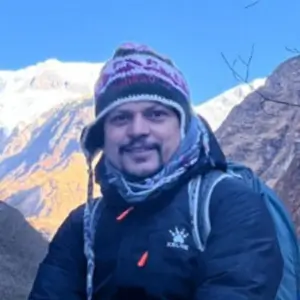
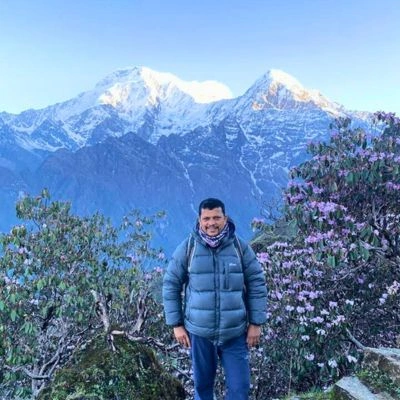
- Cultural depth: Most NTT guides are from the communities along the routes they lead, Sherpa guides on the Everest region routes, Gurung and Magar guides in the Annapurna region. This isn't a marketing point. It's a safety advantage: they know the land, the weather patterns, and the people in a way no outsider can.
- Specialist briefing for your group: Before departure, NTT guides receive a full client brief, your fitness level, any medical conditions, dietary requirements, emergency contacts. They arrive on Day 1 already knowing your group.
NTT guides are also covered by mandatory trekking guide insurance as required by Nepal's tourism regulations, meaning in an emergency, they are not making decisions distorted by financial fear.
The Question to Ask Before You Book
Before any trek, with any operator, ask this:
"Can you send me the name and licence number of the guide assigned to my group, and confirm their first aid certification is current?"
A confident, legitimate operator will answer immediately. An operator who hedges, changes the subject, or says "we'll confirm closer to the date" is telling you something important.
With NTT, this question is answered before you ask it. Their team vetting is part of the booking process, not an afterthought.
The Bottom Line
Nepal's guide licensing system is more rigorous than most trekkers realise. A fully licensed, experienced Nepali guide is not simply a person who knows the path. They are a trained altitude medic, cultural interpreter, logistics coordinator, and emergency responder, all at once, at 5,000 metres, in conditions that would challenge most professionals.
The difference between a licensed senior guide and an unlicensed porter doing a guide's job is not a matter of pride or politeness. At altitude, it is a matter of life.
Choose your operator accordingly. Talk to the NTT team about who will actually be leading your trek and why that matters more than the price of your permit.
This article is for informational purposes. Guide certifications and licensing requirements are subject to change; verify current requirements with the Nepal Tourism Board and your operator directly.