The Annapurna South Expedition (7,219 m) is a challenging and rewarding mountaineering journey in the Annapurna Region, combining scenic trekking through villages like Ghandruk and Chhomrong with a technical climb to the summit. Spanning around 30 days, the expedition includes acclimatization, a dedicated climbing period, and requires strong physical fitness and prior high-altitude experience. Ideal for experienced climbers, it offers breathtaking Himalayan views, remote wilderness, and a true adventure in one of Nepal’s most iconic mountain ranges.
Annapurna South Expedition (7,219 m)
Duration
30 Days
Trip Grade
Challenging
Country
Nepal
Maximum Altitude
7,219 meters
Starts
Kathmandu, Nepal
Ends
Kathmandu, Nepal
Group Size
1-8
Activities
Trekking, mountaineering, glacier travel, high-altitude climbing, and summit expedition
Best Time
Spring (April–May) and Autumn (September–November)
Annapurna South, rising to 7,219 meters (23,684 ft), is one of the magnificent peaks of the Annapurna Massif in Nepal. Known for its dramatic snow-clad faces and steep ridges, this mountain offers a thrilling yet accessible expedition for experienced climbers. Unlike some of the more crowded Himalayan peaks, Annapurna South provides a sense of solitude, with breathtaking views of Machhapuchhre, Hiunchuli, and the Annapurna range along the trekking and climbing route. Its challenging terrain attracts mountaineers who want both a technical climbing experience and the beauty of remote Himalayan landscapes.
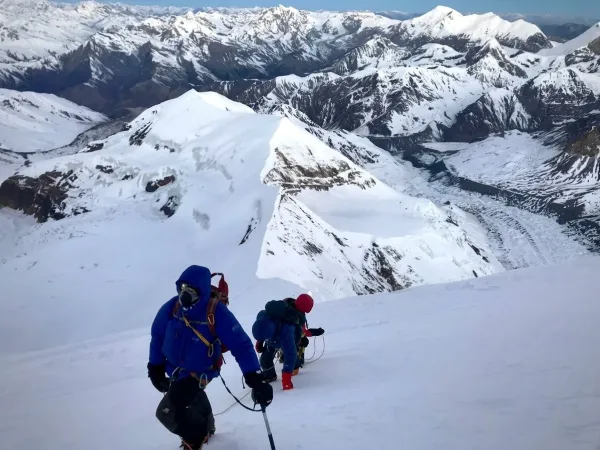
The expedition begins with a scenic trek through the Annapurna region, passing charming Gurung and Magar villages, lush forests, terraced fields, and the serene Modi River valley. Trekkers and climbers gradually acclimatize as they approach the Annapurna South Base Camp, where the real adventure begins. The climb itself involves technical ice and snow routes, fixed ropes, and high-altitude camping. Beyond the thrill of the ascent, climbers are rewarded with panoramic Himalayan vistas, the satisfaction of summiting.
Annapurna South Expedition Highlights
- Summit a 7,219 m peak: Experience the thrill of climbing one of Nepal’s majestic Annapurna peaks.
- Scenic trekking route: Trek through picturesque villages, terraced fields, and lush forests.
- Panoramic Himalayan views: Enjoy stunning vistas of Annapurna I, Machhapuchhre, Hiunchuli, and other surrounding peaks.
- Base Camp experience: Stay at the Annapurna South Base Camp, witnessing the grandeur of the high Himalayas.
- Cultural immersion: Interact with local Gurung and Magar communities along the trekking trails.
- Adventure with fewer crowds: Compared to popular peaks, this expedition offers a sense of solitude and pristine natural beauty.
- Acclimatization opportunities: Gradual trek allows safe acclimatization, preparing for the summit attempt.
- Technical climbing experience: Learn and use ice climbing techniques, ropes, and high-altitude camping skills.
Why choose the Annapurna South?
- Thrilling High-Altitude Adventure: Offers the excitement of summiting a 7,000 m+ peak in the majestic Annapurna region.
- Scenic Trekking: Pass through picturesque villages, forests, and rivers, enjoying authentic Himalayan landscapes.
- Less-Crowded Routes: Experience solitude and pristine nature, away from the busy trekking trails.
- Cultural Experience: Interact with local Gurung and Magar communities along the trail.
- Technical Climbing Exposure: Gain experience with ice, snow, and rope techniques in a safe guided environment.
- Panoramic Himalayan Views: Witness stunning vistas of Annapurna I, Machhapuchhre, Hiunchuli, and surrounding peaks.
- Acclimatization & Preparation: Trekking gradually allows safe adaptation for a successful summit attempt.
Price From
US$11500
US$15000
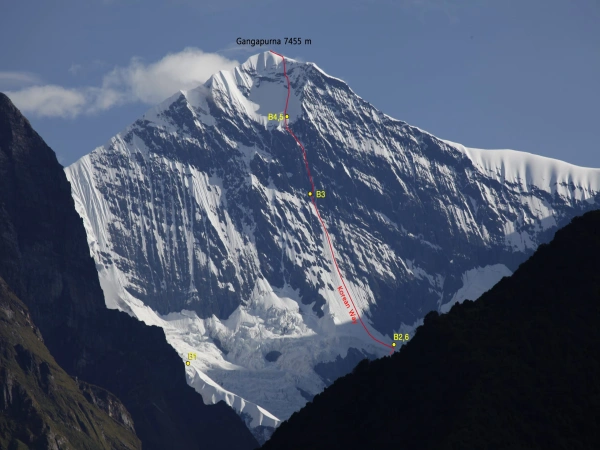
Short Itinerary and Map
Day 1:
Arrival in Kathmandu, and trasnfer to the hotel
Day 2:
Expedition Preparation & Briefing
Day 3:
Drive from Kathmandu to Pokhara
Day 4:
Drive to Nayapul & Trek to Ghandruk
Day 5:
Trek to Chhomrong
Day 6:
Trek to Dovan
Day 7:
Trek to Machhapuchhre Base Camp
Day 8:
Trek to Annapurna South Base Camp
Day 9-24:
Climbing Period for Annapurna South
Day 25:
Trek Back to Dovan
Day 26:
Trek to Jhinu Danda
Day 27:
Trek to Nayapul & Drive to Pokhara
Day 38:
Drive Back to Kathmandu
Day 29:
Free Day in Kathmandu
Day 30:
Final Departure
Annapurna South Expedition (7,219 m) Detailed Itinerary
Day 1
Arrival in Kathmandu, and trasnfer to the hotel
Arrive at Tribhuvan International Airport, and be welcomed by our representative and transferred to the hotel. Rest and prepare for the expedition briefing.
Max Altitude: 1,400m (4,593ft)
Duration: 25-30minutes
Distance: 4-5 km
Accommodation: Hotel Thamel Park
Mode of Transportation: Private airport transfer
Day 2
Expedition Preparation & Briefing
Meet with our expedition team, complete paperwork, check equipment, and attend a briefing on the Annapurna South climb.
Max Altitude: 1,400m (4,593ft)
Meals: Breakfast
Accommodation: Hotel Thamel Park
Day 3
Drive from Kathmandu to Pokhara
Scenic drive through the Kathmandu Valley and along the Trishuli River to Pokhara. Evening leisure by Phewa Lake.
Max Altitude: 830m (2,723ft)
Duration: 6–7 hrs
Distance: 200 km
Meals: Breakfast
Accommodation: Hotel
Mode of Transportation: Private vehicle
Day 4
Drive to Nayapul & Trek to Ghandruk
Drive to Nayapul and start trekking through terraced fields, small villages, and forested trails to reach Ghandruk.
Max Altitude: 2,010m (6,594ft)
Duration: 6-7 hours
Distance: Drive 35 km+ Trek 11 km
Meals: Breakfast, Launch, Dinner
Accommodation: Guesthouse / Tea house
Mode of Transportation: Private vehicle + Trekking
Day 5
Trek to Chhomrong
Trekking along the Modi River valley and climb gradually to Chhomrong village, a traditional Gurung settlement.
Max Altitude: 2,600m (8,530ft)
Duration: 4–5 hrs
Distance: 8 km
Meals: Breakfast, Launch, Dinner
Accommodation: Guesthouse / Tea house
Mode of Transportation: Trekking
Day 6
Trek to Dovan
Trek through forests and steep trails, passing waterfalls and suspension bridges en route to Dovan.
Max Altitude: 2,500m (8,202ft)
Duration: 5–6 hrs
Distance: 9 km
Meals: Breakfast, Launch, Dinner
Accommodation: Guesthouse / Tea house
Mode of Transportation: Trekking
Day 7
Trek to Machhapuchhre Base Camp
Ascend through rhododendron forests to the Machhapuchhre Base Camp with stunning views of the surrounding peaks.
Max Altitude: 3,700m (12,139ft)
Duration: 5–6 hrs
Distance: 10 km
Meals: Breakfast, Launch, Dinner
Accommodation: Tent / Base Camp lodge
Mode of Transportation: Trekking
Day 8
Trek to Annapurna South Base Camp
Trek higher to Annapurna South Base Camp, prepare equipment, and acclimatize for the climb ahead.
Max Altitude: 4,130m (13,549ft)
Duration: 4–5 hrs
Distance: 8 km
Meals: Breakfast, Launch, Dinner
Accommodation: Tent / Base Camp
Mode of Transportation: Trekking
Day 9-24
Climbing Period for Annapurna South
Ascend Annapurna South via established climbing routes. Rest days included for acclimatization. Summit attempt planned based on conditions.
Max Altitude: 7,219m (23,684ft)
Meals: Breakfast, Launch, Dinner
Accommodation: High-altitude tents at BC, Camp I, II, III
Day 25
Trek Back to Dovan
Descend from the Base Camp to Dovan, retracing the route through forests and villages.
Max Altitude: 2,501m (8,205ft)
Duration: 7–8 hrs
Distance: 18 km
Meals: Breakfast, Launch, Dinner
Accommodation: Guesthouse / Tea house
Mode of Transportation: Trekking
Day 26
Trek to Jhinu Danda
Trek further down to Jhinu Danda, a village famous for its natural hot springs – perfect for post-climb relaxation.
Max Altitude: 1,800m (5,905ft)
Duration: 4–5 hrs
Distance: 9 km
Meals: Breakfast, Launch, Dinner
Accommodation: Guesthouse / Tea house
Mode of Transportation: Trekking
Day 27
Trek to Nayapul & Drive to Pokhara
Complete the final descent to Nayapul and drive back to Pokhara for overnight rest.
Max Altitude: 830m (2,723ft)
Duration: 4-5 hours
Distance: Trek 10 km + Drive 35 km
Meals: Breakfast
Accommodation: Hotel
Mode of Transportation: Trekking + Private vehicle
Day 38
Drive Back to Kathmandu
Scenic drive back to Kathmandu, with time to relax or explore local markets.
Max Altitude: 1,400m (4,593ft)
Duration: 6-7 hours
Distance: 200 km
Meals: Breakfast
Accommodation: Hotel Thamel Park
Mode of Transportation: Private vehicle
Day 29
Free Day in Kathmandu
Leisure day for shopping, sightseeing, or cultural tours around Kathmandu Valley.
Max Altitude: 1,400m (4,593ft)
Meals: Breakfast
Accommodation: Hotel Thamel Park
Day 30
Final Departure
Transfer to Tribhuvan International Airport for departure home with unforgettable memories.
Max Altitude: 1,400m (4,593ft)
Duration: 25-30minutes
Distance: 4-5 km
Meals: Breakfast
Mode of Transportation: Private airport transfer
Still Confused?
Choosing the right trek in Nepal can be challenging. Our travel experts are here to help you select the best itinerary based on your fitness level, travel dates, and interests. Contact us for clear information about routes, difficulty, permits, seasons, and pricing. We respond quickly and help you plan with confidence.
Altitude Chart
Cost Details
What’s Included
- Airport Transfers & Transportation: Private vehicle transfers for arrival, departure, and all ground travel as per the itinerary.
- Accommodation: Comfortable hotels in Kathmandu and Pokhara. Tea-house accommodation during the trek. Tented camps during the climbing period.
- Meals: Three freshly prepared meals daily (breakfast, lunch, dinner) during trekking and expedition days.
- Permits & Documentation: Annapurna South Expedition Permit, Annapurna Conservation Area Permit (ACAP), TIMS Card (Trekkers’ Information Management System)
- Professional Expedition Team: Licensed and experienced climbing Sherpa guides. Professional trekking leaders and support crew. Safe and well-managed logistics throughout the expedition
- Climbing Equipment (Group Gear): Expedition tents, ropes, crampons, snow bars, and ice axes. Kitchen tent, dining tent, and other essential group equipment(Personal climbing gear not included)
- Staff Insurance: Full insurance coverage for all trekking, base camp, and climbing staff.
What’s Excluded
- International Airfare: Flights to and from Kathmandu, Nepal, are not included in the package cost.
- Nepal Entry Visa: Travelers are responsible for obtaining their Nepal tourist visa upon arrival at Kathmandu Airport.
- Personal Climbing Gear: Participants must bring their own personal climbing and mountaineering equipment, including boots, clothing, and accessories.
- Personal Expenses: Any personal costs, such as snacks, beverages, hot showers, Wi-Fi, and laundry services are excluded.
- Gratuities: Tips for guides, Sherpas, and porters are not included and are at the climber’s discretion as a gesture of appreciation.
Dates & Availablity
Fixed Departure is for joining pre-scheduled group departures.
Private Trip is for personalized experiences.
Mar 2027
Apr 2027
May 2027
Sep 2027
Oct 2027
Get Instant Confirmation
02 Mar, 2027
Starts on Tuesday
31 Mar, 2027
Ends on Wednesday
Guaranteed
US$11500
US$15000
Get Instant Confirmation
09 Mar, 2027
Starts on Tuesday
07 Apr, 2027
Ends on Wednesday
Guaranteed
US$11500
US$15000
Get Instant Confirmation
16 Mar, 2027
Starts on Tuesday
14 Apr, 2027
Ends on Wednesday
Guaranteed
US$11500
US$15000
Get Instant Confirmation
23 Mar, 2027
Starts on Tuesday
21 Apr, 2027
Ends on Wednesday
Guaranteed
US$11500
US$15000
Get Instant Confirmation
30 Mar, 2027
Starts on Tuesday
28 Apr, 2027
Ends on Wednesday
Guaranteed
US$11500
US$15000
Equipment Lists for Annapurna South Expedition (7,219 m)
Layered clothing, warm boots, gloves, helmet, sun protection, sleeping bag, hydration system, climbing gear (crampons, ice axe, harness), first aid kit, and essential documents.
Upper Body Layers
- Thermal Base Layers: Moisture-wicking long-sleeve shirts.
- Fleece / Mid-Layer Jacket: Provides insulation during trekking and rest periods.
- Down / Insulated Jacket: High-altitude warmth for base and summit camps.
- Softshell / Windproof Jacket: Lightweight, breathable protection from wind and snow.
- Waterproof Shell Jacket: Gore-Tex or equivalent, essential during snowfall or storms.
Lower Body Layers
- Thermal Leggings / Base Layers: Worn under trekking or climbing pants.
- Trekking Pants / Softshell Pants: Durable, comfortable for trekking days.
- Insulated Pants / Down Pants: For high-altitude and summit attempts.
- Waterproof / Windproof Overpants: To protect from wet snow or rain.
Footwear & Accessories
- Trekking Boots: Comfortable, stiff-soled boots for trekking sections.
- High-Altitude / Mountaineering Boots: Insulated, for ice and snow climbing.
- Gaiters: Keep snow, rocks, and debris out of boots.
- Socks: Thermal socks; bring multiple pairs.
- Camp Shoes / Sandals: Lightweight shoes for base camp comfort.
Head & Sun Protection
- Helmet: Lightweight climbing helmet for protection during ice and rock sections.
- Warm Hat / Beanie: Insulated wool or fleece for cold protection.
- Balaclava / Neck Gaiter: Protects face and neck from wind and frostbite.
- Headband: Optional, for additional warmth during trekking.
- Sunglasses / Goggles: UV-protection sunglasses; goggles for snow/ice exposure.
Personal & Medical Kits
- Personal medications
- Altitude sickness medicine (e.g., Diamox)
- Painkillers & anti-inflammatory meds
- Bandages, gauze, blister pads, tape
- Antiseptic/antibiotic ointment
- Thermometer
- Basic first aid kit
Travel Documents
- Passport and visa
- Climbing permit for Annapurna South
- TIMS card & ACAP permit
- Travel insurance with high-altitude coverage
- Copies of all documents stored separately
- Emergency contact list
Miscellaneous
- Trekking poles (adjustable)
- Headlamp with extra batteries
- Camera / GoPro
- Notebook & pen
- Map/compass / GPS device
- Portable charger/power bank
- Whistle or safety signaling device
- Multi-tool / pocket knife
Essential Information
Altitude
- Kathmandu: 1,400 m / 4,595 ft
- Pokhara: 830 m / 2,725 ft
- Ghandruk: 2,010 m / 6,595 ft
- Chhomrong: 2,600 m / 8,530 ft
- Dovan: 2,500 m / 8,200 ft
- Machhapuchhre Base Camp: 3,700 m / 12,140 ft
- Annapurna South Base Camp: 4,130 m / 13,550 ft
- Summit: 7,219 m / 23,684 ft
Distance & Duration
- Kathmandu to Pokhara: 200 km / 6–7 hrs drive
- Trek Nayapul to Ghandruk: 11 km / 5–6 hrs
- Ghandruk to Chhomrong: 8 km / 4–5 hrs
- Chhomrong to Dovan: 9 km / 5–6 hrs
- Dovan to Machhapuchhre Base Camp: 10 km / 5–6 hrs
- Base Camp to Annapurna South Base Camp: 8 km / 4–5 hrs
- Return trek (Base Camp to Dovan): 18 km / 7–8 hrs
- Dovan to Jhinu Danda: 9 km / 4–5 hrs
- Trek & drive back to Pokhara: 10 km trek + 35 km drive / 4–5 hrs + 1 hr
- Drive Pokhara to Kathmandu: 200 km / 6–7 hrs
Accommodation
- Kathmandu & Pokhara: 3-star hotels
- Trekking Villages: Guesthouses / Tea houses
- Base Camp & High Camps: Expedition tents
Meals
- Hotels: Breakfast included
- Trekking & Base Camp: Full board (Breakfast, Lunch, Dinner)
- Summit/High Camps: Meals provided by the expedition team
Transportation
- Airport Transfers: Private vehicle in Kathmandu
- Intercity Travel: Private vehicle (Kathmandu–Pokhara–Kathmandu)
- Trekking: On foot
- Optional Local Porters / Mules: For luggage transport
Climbing Period
- Base Camp to Summit: Day 9–24 (flexible depending on weather and acclimatization)
Permits & Documents
- Climbing Permit: Annapurna South Climbing Permit
- Trekking Permits: TIMS Card, Annapurna Conservation Area Project (ACAP) Permit
- Passport & Visa: Valid for Nepal entry
- Insurance: Travel and high-altitude medical coverage
Weather & Best Time
- Spring (March–May): Clear skies, moderate temperatures
- Autumn (September–November): Stable weather, excellent visibility
- Winter & Monsoon: Not recommended due to heavy snow or rain
Fitness & Skills
- Fitness Level: Good trekking fitness and stamina for 4–6 hrs/day at high altitude
- Climbing Skills: Prior experience with high-altitude trekking and basic technical climbing recommended
Safety & Emergency
- Guide & Sherpa Support: Experienced, licensed guides lead the expedition
- High-Altitude Medical Kit: Included by expedition team
- Emergency Evacuation: Helicopter evacuation possible from Base Camp or below
Communication & Connectivity
- Mobile Network: Limited in villages, none at Base Camp or high camps
- Satellite Phone: Recommended for emergencies at high altitudes
Packing & Luggage
- Personal Backpack: 50–65 L for trekking gear
- Duffel Bag / Expedition Bag: For porters to carry larger equipment
- Weight Limit: 15–20 kg for personal luggage, 25–30 kg for porter luggage
Health & Hygiene
- Drink purified water
- Carry personal toiletries and wet wipes
- Stay hydrated and eat regular meals
- Acclimatize gradually to avoid altitude sickness
Frequently Asked Questions
Where is Annapurna South located?
- Annapurna South is located in the Annapurna Region of Nepal, part of the larger Annapurna Massif in north-central Nepal.
How difficult is the Annapurna South Expedition?
The expedition is considered challenging to highly technical, suitable for experienced climbers. It involves:
- Steep ice and snow climbing
- Glacier travel
- High-altitude endurance above 7,000 meters
Previous experience in peaks like Island Peak or Mera Peak is recommended.
What is the best time to climb Annapurna South?
The best seasons are:
- Spring (March to May) – stable weather and clear views
- Autumn (September to November) – less wind and good visibility
Avoid the monsoon and winter due to extreme weather conditions.
How long does the Annapurna South Expedition take?
The full expedition typically takes 30 days, including:
- Trekking to base camp
- Acclimatization
- Climbing period (Day 9–24)
- Return journey
Do I need prior climbing experience?
Yes, this expedition is not for beginners. You should have:
- Previous high-altitude trekking experience
- Basic mountaineering skills (rope, crampons, ice axe)
- Experience above 6,000 meters is highly recommended
What permits are required for Annapurna South Expedition?
You will need:
- Climbing permit from the Department of Tourism Nepal
- Annapurna Conservation Area Project permit
- TIMS card (Trekkers’ Information Management System)
How high is Annapurna South Base Camp?
- Annapurna South Base Camp is located at approximately 4,500 – 4,700 meters, depending on the route and camp setup.
What are the risks of Annapurna South climbing?
Major risks include:
- Altitude sickness (AMS, HAPE, HACE)
- Avalanches and crevasses
- Extreme weather and cold
- Technical climbing hazards
Proper acclimatization and experienced guides are essential.
What kind of accommodation is available during the expedition?
- Kathmandu & Pokhara: Hotels (3–5 star options available)
- Trekking route: Teahouses/lodges
- Climbing period: Tented camps at base camp and higher camps
How much does the Annapurna South Expedition cost?
The cost generally ranges from USD 8,000 to USD 15,000, depending on:
- Group size
- Services and logistics
- Guide and support team
- Equipment and oxygen supply
What is the success rate of Annapurna South Expedition?
The success rate varies (typically 50–70%) depending on:
- Weather conditions
- Team experience
- Expedition support and planning
Is Annapurna South harder than Everest?
- While Mount Everest is higher, Annapurna peaks are often considered more technical and dangerous due to:
- Avalanche-prone slopes
- Less commercialized routes
- Complex terrain
What fitness level is required for Annapurna South Expedition?
You need:
- Excellent physical fitness
- Strong cardiovascular endurance
- Ability to carry loads at high altitude
- Mental resilience
Training should begin at least 3–6 months prior.
Do I need travel insurance for this expedition?
Yes, travel insurance is mandatory, and it must cover:
- High-altitude climbing (above 7,000 m)
- Emergency helicopter evacuation
- Medical expenses
How cold does it get during the expedition?
Temperatures can drop to:
- Base Camp: -10°C to -15°C
- Higher Camps: -25°C to -35°C or lower
What equipment is required for Annapurna South Expedition?
Key gear includes:
- Mountaineering boots (double boots)
- Down suit
- Ice axe, crampons, harness
- Sleeping bag (-30°C or lower)
- Climbing ropes and technical gear
Can beginners join Annapurna South Expedition?
- No, this expedition is not suitable for beginners. It is designed for experienced climbers only.
How do I prepare for Annapurna South Expedition?
Preparation includes:
- High-altitude trekking experience
- Technical climbing training
- Physical conditioning
- Mental preparation
You May Also Like
Need Help? Call Us+9779851013072