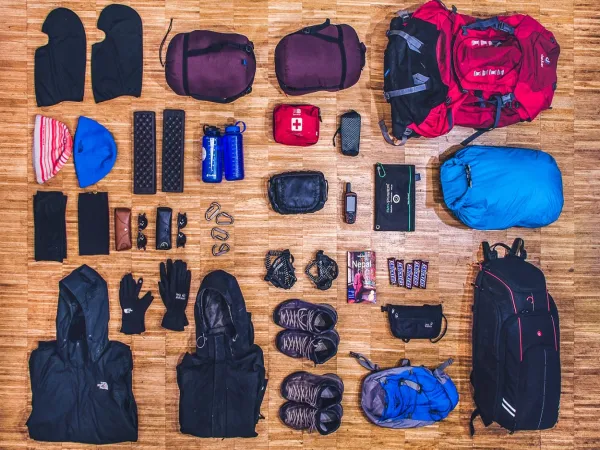
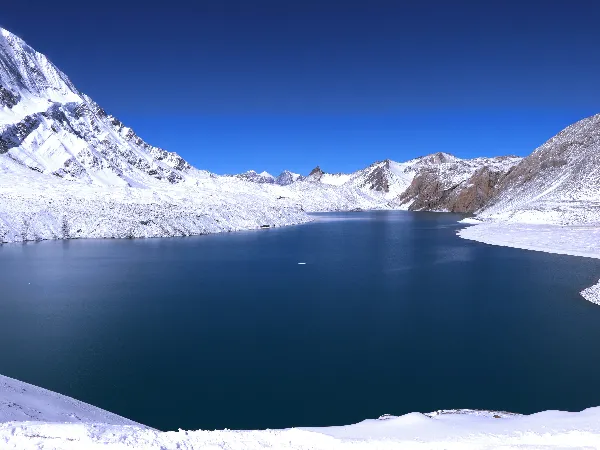
You've been planning your Nepal trek for months. The flights are booked. The permits are researched. The gear list is finalized. But there's one question nobody seems to give you a straight, honest answer on:
What about your dog?
Search the internet and you'll find a frustrating mix of vague advice ("check with your vet"), outdated information, and tour company blogs that don't come close to answering the real questions: Can your dog actually handle Himalayan altitude? Will teahouses turn you away at the door? What happens when your beloved Labrador comes face-to-face with a pack of stray mountain dogs on a remote trail?
This guide answers all of it, the paperwork, the logistics, the trail realities, and the honest limits, so you can make the best decision for you and your animal.
The Short Answer: Yes, You Can Bring Your Dog to Nepal
Let's start there. Nepal does allow dogs and cats to enter the country, and if your paperwork is completed correctly before you arrive, there is no mandatory quarantine period. Hundreds of travelers have done it successfully.
However, Nepal is classified as a high-risk country for rabies, and this one fact shapes almost every aspect of bringing a pet here, from the vaccinations you need before you leave home, to how you bring your dog back into your own country at the end of the trip.
The good news: the process is manageable. The key is starting it early, ideally three months before travel, because several steps have strict timing windows that cannot be rushed.
Here's everything you need to know.
Part 1: Nepal Pet Import Requirements: The Complete Step-by-Step Checklist
Step 1: Microchip Your Pet First
Before anything else, your dog or cat needs an ISO-compliant 15-digit microchip. This is the foundation of all international pet travel, it ties your animal to every document and form that follows.
The critical detail that many people miss: the microchip must be implanted before the rabies vaccination is given. If the order is reversed, the vaccination is not considered valid for import purposes, because there is no way to prove the vaccinated animal is the same animal with the microchip.
If your pet is already microchipped, confirm the chip is ISO-15 compliant (the international standard). Some older North American chips use a different frequency and may not be readable by international scanners. Your vet can check this at the same appointment.
Make sure your contact details on the microchip registry are up to date and include a phone number or email that will work internationally.
Step 2: Rabies Vaccination: Timing Is Everything
Nepal requires proof that your pet has been vaccinated against rabies. The vaccination must have been given at least 30 days before travel, a freshly administered shot the week before your flight will not be accepted.
If your pet's current rabies certificate has expired, get the booster well in advance of your travel date. It is also worth keeping the previous vaccination certificate with you, as this demonstrates continuous vaccination history, something that can matter at customs.
The vaccination certificate must include: your pet's name and description, the microchip number, the vaccine brand and batch number, the date of administration, and the vet's signature and stamp.
Step 3: International Health Certificate
You need an international health certificate issued by a licensed veterinarian in your home country, within 10 days of your departure date. This is a tightly enforced window, a certificate issued 12 days before travel is not valid.
The certificate confirms that your pet is healthy, free from contagious disease, and fit for travel. It will list your pet's vaccinations, microchip number, and physical description.
From the moment it is issued, the certificate is valid for 30 days of travel. If you are staying in Nepal for longer than 30 days, you will need a Nepalese health certificate to exit the country, which requires a visit to a Kathmandu veterinarian, followed by certification from Nepal's Ministry of Agriculture and Livestock Development Services.
Some countries (particularly the USA) also require a USDA endorsement of the health certificate before travel. Check with your country's relevant authority.
Step 4: Notify the Kathmandu Animal Quarantine Office
This step is frequently overlooked, and skipping it can cause significant delays and stress on arrival, especially late at night.
Contact the Animal Quarantine Office at Tribhuvan International Airport at least one week before your arrival (the formal requirement is 24–48 hours, but experienced pet travelers consistently recommend a week):
This ensures that a quarantine officer is present and prepared when you land. Without advance notice, you risk arriving to find no officer available, which can mean your pet is held while you wait for one, sometimes for hours.
Step 5: The Import Tax, Bring Cash
This is the most commonly missed cost in all the standard pet travel guides, and it surprises almost every traveler who encounters it.
Nepal charges an import tax on dogs of approximately 40% of your pet's assessed value. The value is determined by a customs agent at the airport, typically through a quick internet search of your dog's breed. A border collie assessed at $500, for example, would incur a $200 import tax payable at the airport bank.
You cannot pay this by card. The bank near customs rarely has card facilities, and there is no ATM conveniently located. Bring sufficient cash in a major convertible currency, USD, EUR, and GBP are all typically accepted. Build this into your budget as a firm line item, not an afterthought.
For cats and smaller pets, the assessed value (and therefore the tax) is generally lower, but the same principle applies.
Step 6: Research Your Home Country's Re-Entry Rules Before You Leave
This is the step that catches travelers off guard most severely, not on the way into Nepal, but on the way out.
Because Nepal is classified as a high-risk rabies country, many nations have specific requirements for dogs returning from Nepal:
United States: Dogs returning from Nepal must have specific CDC documentation and may only re-enter through one of 18 approved airports with CDC quarantine stations. If your return flight lands at a smaller regional airport, your dog will not be allowed through.
European Union and United Kingdom: A rabies antibody titer test, a blood test confirming your dog's immune response to rabies, is typically required. This test must be done at an approved laboratory, and the results must be at least 30 days old before entry. In some cases, the waiting period after the test can be three months or more.
Australia and New Zealand: Stringent biosecurity rules mean that bringing a dog back from Nepal requires very careful advance planning, often many months in advance.
The golden rule: Research your country's specific re-entry requirements before you leave home. Your vet at home should be your primary resource for this, and contacting your country's official animal import authority is strongly recommended. Trying to figure this out after you arrive in Nepal is too late.
Quick Reference: Nepal Pet Import Checklist
Requirement
Details
Microchip
ISO 15-digit chip, implanted before rabies vaccination
Rabies vaccination
At least 30 days before travel, current certificate
~40% of assessed value, payable in cash at airport
Entry point
Tribhuvan International Airport, Kathmandu only
Re-entry rules
Check your home country before you leave, may require titer test weeks in advance
Part 2: Getting Your Pet to Nepal: Flights and Practical Logistics
In-Cabin vs. Cargo
Small dogs and cats (generally under 7–8kg including the carrier) may be permitted to travel in-cabin on some international flights. Larger dogs travel as checked baggage or air cargo. Policies vary significantly between airlines, confirm directly with your carrier when booking, not at check-in.
Key points:
Book your pet's space early. Airlines limit the number of animals per flight. This space can fill up quickly during peak travel seasons.
IATA-compliant crate required for cargo. The crate must be sturdy, well-ventilated, and large enough for your dog to stand, turn, and lie down. Even minor damage, a loose bolt, a cracked panel, a weak door latch, can result in rejection at check-in. Don't leave crate quality to chance.
Nepal Airlines domestic connections: Nepal Airlines does not permit pets on Airbus A320 aircraft. If you are connecting to Pokhara or Lukla on a domestic flight after arriving in Kathmandu, confirm the aircraft type with the airline in advance.
Only one entry point for pets: Pets may only enter Nepal through Tribhuvan International Airport in Kathmandu. There is no route for bringing animals in at a land border crossing.
Airlines with Proven Track Records for Nepal Pet Travel
Among travelers who have brought dogs to Nepal, Qatar Airways (via Doha) and Thai Airways (via Bangkok) have been used successfully. However, pet policies change. Always verify directly with the airline at the time of booking, and confirm again 72 hours before departure.
Part 3: What Trekking With Your Dog in Nepal Is Actually Like
This is the part no tour company blog ever gets into. Here is the honest, ground-level reality.
Teahouses: No Policy Means Everything Is Negotiable
There are no official regulations governing whether teahouses must accept your dog. No national rule says yes, and no rule says no. It is entirely at the discretion of the individual teahouse owner, and this varies enormously.
In practice, teahouse owners on major routes have seen everything. The way the question is asked matters. A confident, polite approach, preferably through your guide, who may have a relationship with the owner, goes a long way. A well-behaved dog that settles quietly and doesn't jump on other trekkers is far more likely to be welcomed back night after night.
One real-world example from the Annapurna Circuit illustrates this well: a trekker's dog was initially viewed with suspicion by a teahouse owner until the guide explained that the dog had walked the entire trail herself, including the 5,416-metre Thorong La Pass. The owner's reaction was immediate approval, she nodded and waved them in. In Nepal, where strength and endurance are deeply respected, a dog that earns its way tends to be welcome.
Be prepared, however, for nights when a teahouse declines. This is not personal, it may be about other guests' comfort or the owner's preferences. Have a plan: your guide can often find an alternative, and a good dog sleeping pad and jacket mean your dog can rest comfortably outside or in a covered common area if needed.
The Stray Dog Issue: Read This Before You Go
This is the single most important practical safety consideration when trekking with your own dog, and it is almost never covered in standard travel guides.
Nepal has a large population of stray dogs, both in cities and on mountain trails. Many of them are territorial. Your dog, clean, well-fed, leashed, and smelling distinctly of home, will attract attention.
What works: carry a trekking pole or a walking stick. The sound of it striking the ground as you walk is usually enough to keep strays at a distance. If one becomes more aggressive, the local trick of pretending to pick up a stone and throw it tends to work immediately, strays in Nepal have learned to associate that gesture with consequences. Locals are experienced with this and will often come to your assistance if you attract their attention.
What does not work: hoping it won't happen, or relying on your dog to manage the situation itself.
Your dog's rabies vaccination is not just a bureaucratic requirement here. It is genuine protection, because the chance of a stray dog encounter on a Himalayan trail is real.
Altitude and Your Dog: The Honest Assessment
Your dog cannot tell you when it doesn't feel well. That is the central challenge of taking a dog to altitude, and it requires your full attention.
Dogs experience the same altitude-related challenges as humans: reduced oxygen, cold temperatures, dehydration, and, if ascent is too fast, altitude sickness. Signs to watch for include unusual lethargy, loss of appetite, laboured or heavy breathing, stumbling, or disorientation. If you see any of these signs above 3,000 metres, descend immediately. Do not wait to see if it passes.
The ascent rule that applies to humans, gain no more than 300 to 500 metres per day above 3,000 metres, is a good baseline for dogs too. Build in rest days the same way you would for yourself.
One thing dogs do differently from humans: they will often continue moving to stay with their owner even when their body is struggling. They do not self-regulate at altitude the way a human would. You have to watch them more carefully than they watch themselves.
Paw care is a practical concern that owners often underestimate. Himalayan trails above 3,000 metres are rocky, sometimes icy, and hard on paws. Check your dog's paws each evening for cuts, cracks, or raw spots. Dog boots provide protection on particularly rough sections, test them at home before the trek, because many dogs take time to adjust to wearing them.
Cold is the other major concern. Temperatures at altitude drop sharply after sunset. Above 4,000 metres, night temperatures can fall to -10°C or lower. A dog that is perfectly comfortable on the trail during the day can be seriously cold at night without shelter or insulation. A well-fitted dog jacket and a closed-cell foam sleeping pad are essential kit from about 3,500 metres upward.
Food and Water on the Trail
You cannot source quality dog food in mountain teahouses. Bring everything your dog needs for the entire trek from Kathmandu. Pack more than you think you need, weather delays and itinerary changes happen, and running out of food for your dog on a remote trail at 4,000 metres is a miserable situation.
For water, treat your dog's drinking water the same way you treat yours. Untreated stream water at altitude carries giardia and other pathogens that affect dogs and humans alike. If you are using a filter or iodine tablets, use them for your dog's water too.
Most trails have sufficient natural water sources. On the Annapurna and Langtang routes particularly, streams and clean water points are regular enough that you rarely need to carry more than a litre or two between stops.
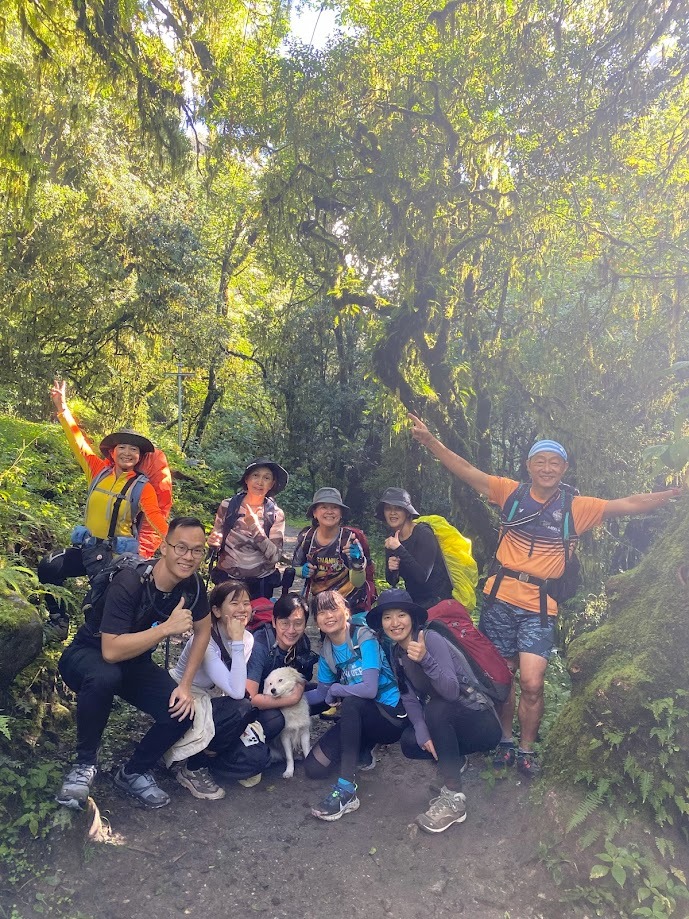
During langtang trek . Our Guest with her Pet dogs
Part 4: The Best Dog-Friendly Trekking Routes in Nepal
Not every trek in Nepal is equally suitable for a dog. Here is an honest breakdown, from the most accessible to the most challenging.
Highly Recommended
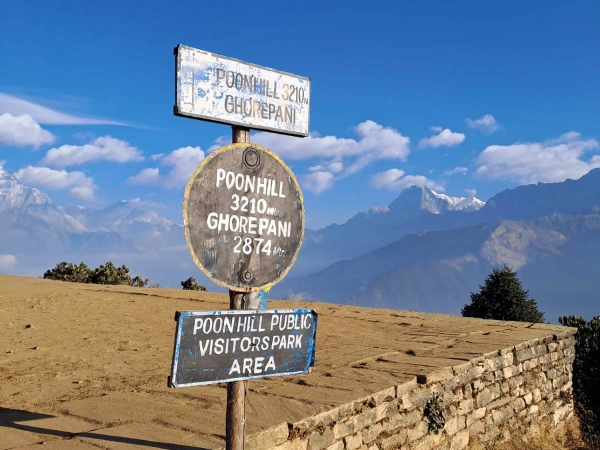
Poon Hill Trek (4–5 days, maximum elevation 3,210m)
This is the most dog-friendly major trek in Nepal. The elevation is manageable, the trail is well-maintained with gentle switchbacks, teahouses are densely spaced (meaning you have options if one turns you away), and the rhododendron forests and mountain views are spectacular. The Poon Hill sunrise, with the Annapurna and Dhaulagiri ranges glowing at dawn, is one of the most beautiful sights in the Himalayas. It is absolutely achievable with a healthy, fit dog.
A less-known but outstanding choice for a first dog trek in Nepal. The trail features several natural water sources where your dog can drink and cool off, the terrain is well-maintained without extreme rocky sections, and the maximum altitude is comfortably within safe range. The views of surrounding peaks are genuine and beautiful, the local communities along the route are welcoming, and you will likely have the trail largely to yourselves.
Langtang Valley Trek (7–10 days, maximum 3,870m to Kyanjin Gompa)
Accessible from Kathmandu by a single drive, Langtang offers incredible scenery with wide, open valleys, yak pastures, and Tibetan-influenced villages. The elevation profile is gradual and well-suited to acclimatisation. Many trekkers consider it the most beautiful short trek in Nepal, and it is a genuinely good option for a dog with solid mountain fitness.
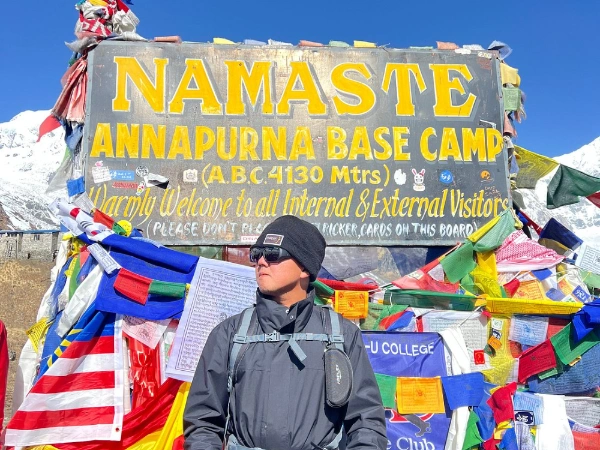
Annapurna Base Camp Trek (7–10 days, maximum 4,130m)
This is doable with a fit, healthy dog, but requires honest preparation. The ascent into the Annapurna Sanctuary is steep and continuous. The final approach to base camp involves a long day at high elevation, and nights at 4,130m will be seriously cold. Dogs have completed this trek successfully, but it should not be attempted lightly. Discuss the specific elevation profile with your vet before committing.
Annapurna Circuit (12–18 days, maximum 5,416m at Thorong La)
The circuit itself is varied and manageable for most of its length, but the Thorong La Pass crossing at 5,416 metres is a serious undertaking for any dog. This is very high altitude, the terrain is rocky and exposed, and the crossing is long and strenuous. If you are considering this route, talk to your vet honestly about whether your specific dog is a candidate for this elevation. Dogs have crossed Thorong La, the anecdote shared earlier in this guide is a real one. But it should be treated as a genuine risk decision, not an assumption.
Not Recommended
Everest Base Camp (12–14 days, maximum 5,364m)
The primary issue is not the altitude alone, it is the Lukla flight. The domestic flight to Lukla is frequently cancelled due to weather, sometimes for multiple consecutive days. Managing a dog through repeated delays, alternative transport arrangements, and the logistics of a remote high-altitude route adds a layer of complexity that makes this trek genuinely challenging for pet owners. If you are determined to attempt it, plan for significant buffer time and have a clear contingency plan.
Manaslu Circuit, Upper Mustang, Upper Dolpo, and all restricted area treks
These routes require licensed guides and special restricted area permits. The added complexity of bringing a dog into areas with minimal veterinary resources, remote trails, and high-altitude crossings means these are not practical choices for most pet owners.
Part 5: The Trail Dogs of Nepal: An Unexpected Gift
If you are trekking Nepal without your own dog, or even if you are, there is a good chance you will gain a canine companion anyway.
Nepal's trails are home to a loose community of semi-feral dogs who have spent their lives in the mountains. They know every teahouse, every shortcut, and every weather sign. On the major routes, these dogs have a habit of attaching themselves to trekking groups and walking alongside them, sometimes for a day, sometimes for an entire week.
Experienced trekkers describe these trail dogs as something between a guide and a companion. They move at a pace that matches your own, rest when you rest, and seem to take genuine pleasure in the company. The locals along the routes know them by name. Teahouse owners leave out scraps. They belong to the mountain in a way that is hard to describe until you have walked with one for a few days.
If one joins you, a small amount of your food is a kind gesture, dal bhat rice, plain chapati, or a piece of boiled egg. Avoid anything with onion, garlic, chocolate, or grapes. Do not create a feeding dependency by offering large amounts regularly, as this makes it harder for the dog to return to its mountain life when you eventually part ways.
The farewell, when it comes, is one of the quietly emotional moments that long-term trekkers remember for years.
Part 6: Bringing Your Pet Home: Don't Get This Wrong
The return journey is where many pet owners encounter their most serious problems, because they researched the rules for entering Nepal thoroughly but forgot to research the rules for returning home.
Nepal's high-risk rabies classification means your dog's re-entry into most western countries involves specific documentation and sometimes long waiting periods.
For Travellers Returning to the USA
Dogs returning from Nepal must be accompanied by two pieces of CDC documentation per animal. Nepal is listed as a high-risk country, which means returning dogs may only re-enter the United States through one of 18 airports that have a CDC quarantine station. If your return flight is routed through a smaller airport not on that list, your dog will not be permitted to land.
Check the CDC's current list of approved airports and plan your return routing accordingly.
For Travellers Returning to the EU or UK
A rabies antibody titer test, a blood test that confirms your dog's immune response to rabies is at the required level, is typically required. This test must be done at an approved laboratory. The results must generally be at least 30 days old before your dog can enter the EU or UK. In some cases, the waiting period is three months or more.
This means the titer test may need to be done before you leave home, not in Nepal, not on the way back. Confirm your specific country's requirements with your vet and your country's official animal import authority well in advance of booking your trip.
For All Travellers Leaving Nepal
When it is time to leave Nepal with your pet, you will need an export health certificate. This must be completed by a veterinarian in Kathmandu and then certified by Nepal's Ministry of Agriculture and Livestock Development Services.
Once this certificate is issued, you have 10 days to depart Nepal.
A trusted Kathmandu vet with experience in international pet documentation is essential for this step. Contact our team and we can connect you with a local veterinarian who has helped numerous international clients through this process.
Part 7: A Practical Packing List for Trekking With a Dog in Nepal
A separate packing list for your dog, because the standard gear guides for Nepal never include this:
Documentation (carry originals and two copies of each):
Microchip certificate
Rabies vaccination certificate (full history, not just the most recent)
International health certificate
Quarantine office notification confirmation email
Import tax payment receipt (from arrival at Kathmandu airport)
Your home country's re-entry documentation (titer test results, CDC forms, etc.)
Food and water:
Full supply of your dog's regular food for the entire trek plus 3 extra days
Small collapsible bowl (one for food, one for water)
Water filter or purification tablets for your dog's drinking water
Health and safety:
Your dog's regular medications plus extra supply
Flea and tick prevention (up to date before travel)
Dog-specific first aid kit: antiseptic wipes, bandages, tweezers, blister pads for paws
Dog boots (tested at home before the trek)
A copy of your vet's contact details and any emergency veterinary contacts in Kathmandu
Comfort and warmth:
Insulated dog jacket (essential above 3,500m)
Closed-cell foam sleeping pad
Lightweight harness and lead (a harness is safer than a collar on steep terrain)
Trekking pole or walking stick (for stray dog encounters, yours, not your dog's)
The Honest Verdict: Is It Worth It?
This is the question underneath everything else in this guide.
Bringing your dog to Nepal is logistically demanding. It is more expensive than most people expect when they start researching. It involves real altitude risks that require honest conversations with your vet, and real unknowns, a teahouse that turns you away, a stray dog encounter on a remote trail, a flight delay that stretches your plans. None of these things are insurmountable. All of them require preparation.
And for the right dog, on the right route, with the right preparation? It is one of the most remarkable things a person and their animal can do together.
There is something particular about walking a mountain trail in Nepal with a dog, the way the relationship simplifies, the way the animal reads the trail and the weather and your mood with an attention that no human companion quite replicates. Trekkers who have done it describe it in terms that are difficult to explain to anyone who hasn't: a sense of completeness, of having brought the whole of yourself to one of the most beautiful places on earth.
The mountains of Nepal have been welcoming people for generations. With the right preparation, they have room for your dog too.
Ready to Plan Your Nepal Trek With Your Dog?
At Nepal Treks and Tour, we have been designing custom Himalayan treks for over 15 years. We know which teahouses on which routes are most welcoming to dogs. We know the right pace for a pet-accompanied itinerary. We can connect you with trusted Kathmandu veterinarians who specialise in international pet documentation, and we can help you design a route that matches your dog's fitness and altitude tolerance.
The best first step is a conversation, with your vet about your dog's readiness, and with us about everything else.
Have you trekked Nepal with a dog? We'd love to hear your experience in the comments below, the trail dog community is a generous one, and your tips might help another traveller and their dog find their way to the Himalayas.
Disclaimer: Pet import regulations and airline policies change regularly. The information in this guide reflects current knowledge as of 2025. Always verify requirements with the Nepalese Animal Quarantine Office, your home country's animal import authority, and your airline before travel. Nepal Treks and Tour is not responsible for regulatory changes that occur after publication.