A Journey Through the Roof of the World —
Ancient Temples, Eternal Peaks & the Soul of the Himalayas
The Kingdom of a Thousand Worlds in One Small Country
Sandwiched between two giants, China to the north, India to the south — Nepal is a sliver of a nation that somehow contains everything: the world's highest peaks, steaming jungle lowlands, medieval cityscapes, and a spirituality so thick you can feel it in the mountain air.
There is a moment, somewhere above 3,000 metres on the trail to Namche Bazaar, when the clouds part and Everest, Sagarmatha in Nepali, Chomolungma in Tibetan, reveals itself. The mountain is impossibly large. It doesn't look like something that belongs on Earth. In that instant, every mile walked, every prayer flag fluttered, every cup of butter tea shared with a Sherpa family makes complete and utter sense. Nepal doesn't reveal itself all at once. It grants its wonders slowly, like a teacher who knows you need to earn what you receive.
Tourism is Nepal's lifeblood. Each year, hundreds of thousands of travellers pour through Tribhuvan International Airport, backpackers, mountaineers, pilgrims, wildlife seekers, and culture-hungry wanderers, all drawn by the same impossible promise: that in one small country they can find almost everything the world has to offer.
"Nepal is not a destination. It is an initiation. You arrive as one person and leave as someone who will never again take flat ground for granted."
— Classic trekker's wisdomKathmandu: A City Written in Stone and Smoke
Begin in Kathmandu, the capital, a city that should not work but does. Dusty lanes squeeze past flower vendors, honking motorbikes, and ancient temples so seamlessly integrated into daily life that locals dry laundry on their steps. The Kathmandu Valley holds three UNESCO World Heritage cities: Kathmandu itself, Bhaktapur, and Patan (Lalitpur). Together they contain more than 130 important monuments, pagodas, Buddhist stupas, royal courtyards — built by a succession of Malla kings who seemed to compete with one another purely on the grounds of architectural splendour.
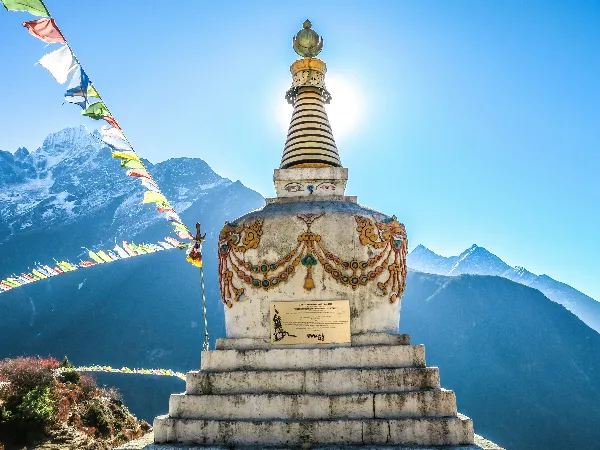
Boudhanath Stupa, on the eastern fringe of the capital, is the largest stupa in South Asia and one of the holiest sites in Tibetan Buddhism. At dawn, monks in saffron robes circle its vast white dome, spinning prayer wheels, while the all-seeing eyes of the Buddha gaze in every direction. Swayambhunath, the "Monkey Temple", offers a steep climb rewarded by a panoramic sweep of the entire valley, a golden spire blazing in the morning light, and the cheerful chaos of hundreds of rhesus macaques.
Pokhara: The Jewel of the Annapurnas
A forty-five-minute flight west of Kathmandu deposits you in Pokhara, a city so beautiful it feels almost unfair. The Phewa Lake mirrors the Annapurna massif on calm mornings, a double vision of snow peaks floating above turquoise water that no photograph fully captures. The lakeside promenade hums with cafés, kayak rentals, paragliders launching from Sarangkot ridge, and travellers in no hurry to be anywhere else.
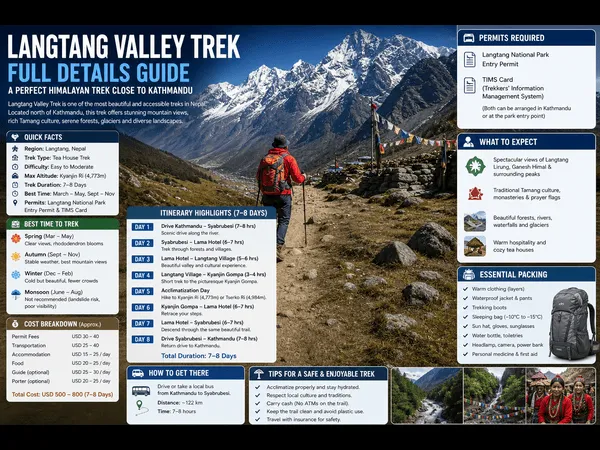
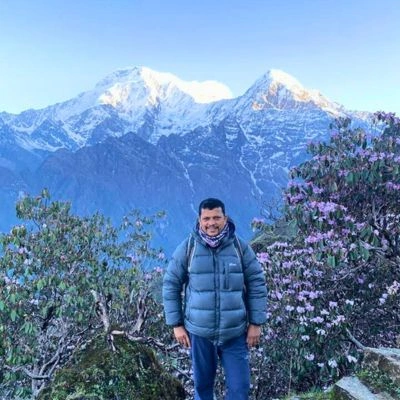
Pokhara is the gateway to the Annapurna Circuit, one of the world's great long-distance treks, and to the Annapurna Base Camp (ABC) trail, a shorter, equally dramatic route that leads through rhododendron forests, terraced farmland, and high glacial amphitheatres to a bowl of mountains that feels like the end of the world. The trekking infrastructure here is superb: teahouses at every waypoint, warm dal bhat twice a day, and guides who carry your pack and your spirits with equal ease.
Nepal is home to eight of the planet's fourteen 8,000-metre mountains, including Everest at 8,849 m.
Ten sites across Nepal carry UNESCO World Heritage status, from the Kathmandu Valley to Lumbini.
Nepal's population of 30 million speaks over 123 languages and dialects across its diverse communities.
Nepal is one of the world's top birdwatching destinations,
nearly 9% of all bird species on Earth.
Lumbini: The Birthplace of the Buddha
In Nepal's flat Terai lowlands, near the Indian border, lies Lumbini: the birthplace of Siddhartha Gautama, the historical Buddha. The Maya Devi Temple marks the exact spot; beside it stands the Ashoka Pillar, erected by the Indian emperor Ashoka in 249 BCE as a monument to his pilgrimage here. The sacred garden is hushed, frangipani-scented, and ringed by monasteries built by Buddhist nations from Thailand to Japan, South Korea to Germany: a remarkable testament to a faith that spread from this quiet corner of the Terai across the entire known world.
Chitwan: Where the Jungle Roars
Drive south from Kathmandu and the mountains give way to the Terai, a strip of subtropical floodplain that harbours Chitwan National Park, one of Asia's premier wildlife sanctuaries. Once a royal hunting reserve, Chitwan is now a conservation success story: the one-horned rhinoceros population has recovered dramatically, Bengal tigers prowl the tall elephant grass, and gharial crocodiles bask on the banks of the Rapti River. Jeep safaris, elephant back rides, and dugout canoe trips on the river are the classic ways in. Early mornings here are extraordinary, mist rising off the grasslands, deer grazing in the pale light, the distant rumble of something large moving through the thicket.
"To trek in Nepal is to walk through geology, through history, and through yourself: all at once."
— Himalayan trekkers' sayingWhen to Go
Nepal rewards travellers year-round, but the seasons shape radically different experiences:
March–May. Rhododendrons in bloom, stable trekking weather. Peak climbing season on Everest.
June–August. Lush greenery, fewer crowds. Mustang & Dolpo stay dry, hidden gems for bold travellers.
Sept–Nov. Crystal clear skies, ideal for trekking & mountaineering. Nepal's most popular season.
Dec–Feb. Cold at altitude, but Kathmandu valley & Chitwan are pleasant and peaceful.
The People: Nepal's Greatest Wonder
Every traveller who has spent time in Nepal comes home talking not about the mountains but about the people. Nepal's 30 million citizens belong to over 123 ethnic groups, Newars, Sherpas, Gurungs, Tamangs, Tharus, Madhesis, and dozens more, each with distinct traditions, festivals, food, and music. Yet the country operates with an astonishing warmth and communal spirit. "Atithi Devo Bhava", the guest is God, is not just a tourism slogan but a lived philosophy. Strangers invite you in for tea. Porters carry impossible loads with impossible smiles. Children wave from schoolyards as if your arrival is the best thing that has happened all week. It very likely is.
Nepal has weathered earthquakes, political upheaval, and economic hardship with a resilience that humbles the visitor. Tourism is not just an industry here; it is a bridge, between the outside world and a culture that has preserved its spiritual depth and artistic heritage against all odds. When you spend your money in a local teahouse, hire a local guide, or buy a thangka painting directly from the artist, you are participating in something larger than sightseeing. You are part of Nepal's story.
Practical Notes for the Traveller
Nepal is accessible and affordable. A Nepal Tourist Visa can be obtained on arrival at Tribhuvan Airport or at land border crossings. Trekkers in the Annapurna or Everest regions require a TIMS (Trekkers' Information Management System) card and the relevant conservation area permit, both easily arranged in Kathmandu or Pokhara. Altitude sickness is real: ascend slowly, drink water constantly, and heed the golden rule, never go up if you feel unwell. The food, dal bhat, momos, thukpa noodle soup — is cheap, filling, and deeply satisfying. And carry cash; ATMs exist but the mountain trails do not.
Most of all, carry patience. Nepal runs on its own time, and that is not a flaw, it is an invitation to slow down, to look up, to notice the prayer flags trembling in the high wind, each one sending its message out to the universe. In a world that moves too fast, Nepal is a country that insists you be present. That is its greatest gift to the traveller.