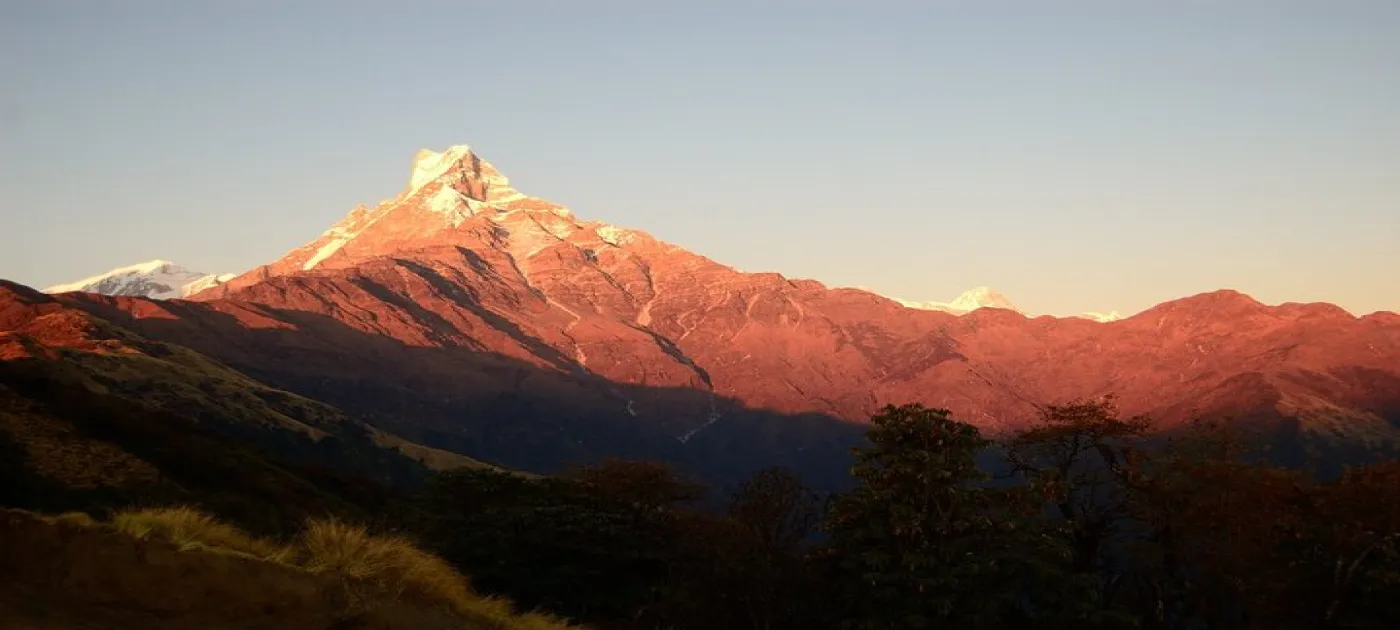
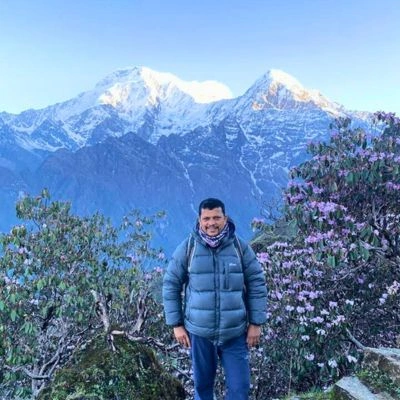
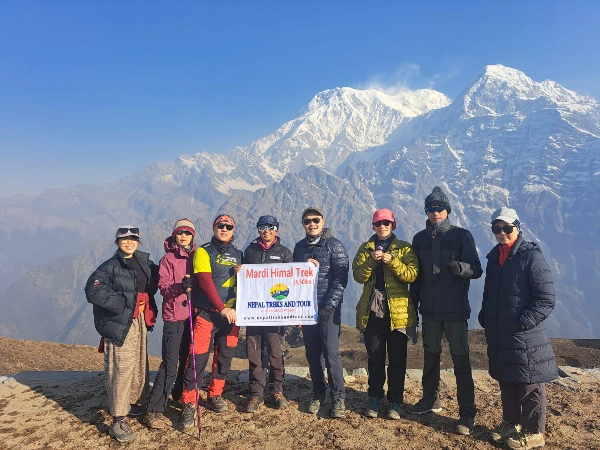
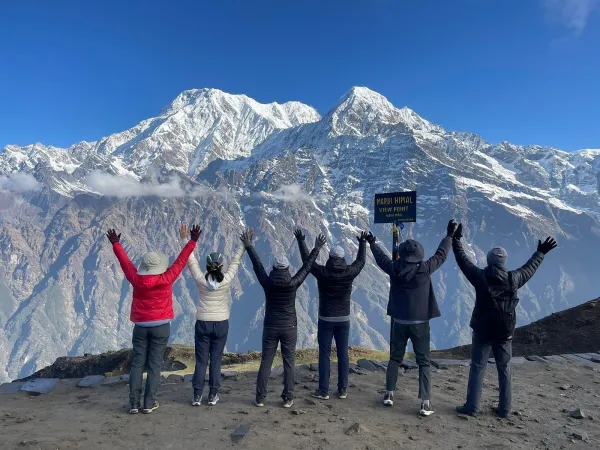
The Mardi Himal Trek is one of Nepal’s best short treks in the Annapurna region, offering breathtaking views of Machapuchhre (Fishtail), Annapurna South, and Hiunchuli. Known as a hidden gem, this trek combines dense forests, alpine ridges, and panoramic Himalayan scenery within just 5–7 days. With moderate difficulty and fewer crowds, it is perfect for beginners and experienced trekkers alike.
Mardi Himal Trek Overview
- Region: Annapurna Region
- Duration: 5–7 Days
- Maximum Altitude: 4,500 m
- Difficulty Level: Easy to Moderate
- Starting Point: Kande / Phedi
- Ending Point: Siding
- Accommodation: Teahouses
Why Choose Mardi Himal Trek?
- Short and scenic trek (5–7 days)
- Less crowded than Annapurna Base Camp
- Stunning close-up views of Machapuchhre
- Diverse landscapes: forest, ridge, alpine
- Ideal for beginners and time-limited travelers
- Teahouse trekking experience
Mardi Himal Trek Itinerary (6 Days)
Day 1: Drive to Kande – Trek to Forest Camp
Day 2: Forest Camp to Low Camp
Day 3: Low Camp to High Camp
Day 4: High Camp to Mardi Himal Base Camp (4,500m) – Return
Day 5: Trek to Siding Village
Day 6: Drive back to Pokhara
Typical trekking duration is 4–6 hours per day, depending on pace.
Best Time for Mardi Himal Trek
Choosing the right season is key to enjoying the Mardi Himal Trek at its best. Weather, visibility, and trail conditions vary throughout the year, so here’s a complete seasonal breakdown:
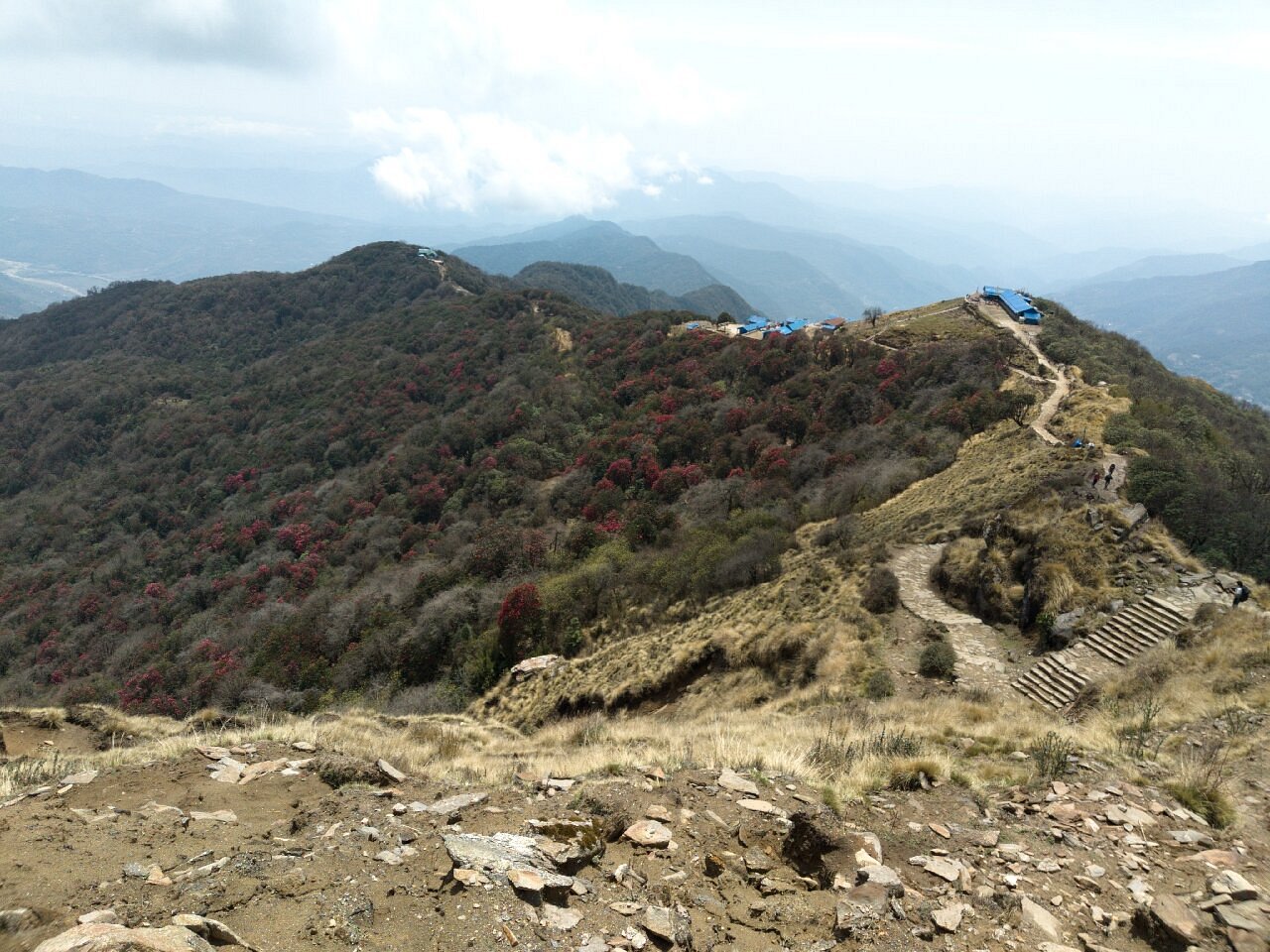
Spring (March – May) – Best Overall Season
Spring is one of the most popular and rewarding times for the trek.
Why go in spring?
- Blooming rhododendron forests (especially in March–April)
- Clear mountain views of Machapuchhre and Annapurna
- Pleasant temperatures (10°C to 20°C at lower altitudes)
- Stable weather conditions
Autumn (September – November) – Peak Season
Autumn is considered the best time overall due to perfect trekking conditions.
Why go in autumn?
- Crystal-clear skies and best mountain visibility
- Dry trails and stable weather
- Comfortable temperatures
- Festive season in Nepal (Dashain & Tihar)
Winter (December – February) – Quiet but Cold
Winter offers a peaceful trekking experience with fewer crowds.
Pros:
- Snow-covered landscapes
- Quiet trails and less traffic
- Clear skies on most days
Cons:
- Very cold temperatures (down to -10°C at high camp)
- Snow may block trails near Base Camp
Monsoon (June – August) – Least Recommended
This is the off-season due to heavy rainfall.
Challenges:
- Slippery and muddy trails
- Leeches in forest areas
- Limited mountain visibility
Pros:
- Lush green landscapes
- Fewer tourists
The Mardi Himal Trek is best done in spring and autumn for clear skies, stable weather, and incredible mountain views. While winter offers solitude and snow, monsoon is less ideal due to rain and poor visibility.
Permits Required for Mardi Himal Trek
To trek in the Mardi Himal region, which lies inside the Annapurna Conservation Area, you must obtain official trekking permits. These permits are mandatory and checked at multiple checkpoints along the trail.
Annapurna Conservation Area Permit (ACAP)
This is the main and most important permit required.
Why you need it:
- Entry into the protected Annapurna region
- Supports conservation, trail maintenance, and local communities
Cost:
- Foreigners: NPR 3,000 (~USD 22–27)
- SAARC Nationals: NPR 1,000 (~USD 7–8)
This permit is compulsory for all trekkers entering the Mardi Himal trail.
TIMS Card (Trekkers’ Information Management System)
This card is used for trekker safety and tracking.
Purpose:
- Records your trekking details
- Helps authorities track trekkers in emergencies
Cost:
- Foreigners: NPR 2,000 (~USD 15–20)
- SAARC Nationals: NPR 1,000
However, recent updates suggest:
Local / Rural Municipality Entry Permit (Optional / New Practice)
In some cases, trekkers may be asked for a local area entry permit.
Purpose:
- Supports local government and community development
- Applies in specific checkpoints or routes
Not always strictly enforced, but may be required depending on route and regulation updates
Key Tips
- Carry permits at all times (checked at multiple checkpoints)
- Bring passport copies and photos
- Keep both digital and printed copies
For the Mardi Himal Trek, you mainly need:
ACAP Permit (mandatory)
TIMS Card (generally required, but sometimes replaced by a guide system)
Local permit (optional/area-specific)
Accommodation & Food on Mardi Himal Trek
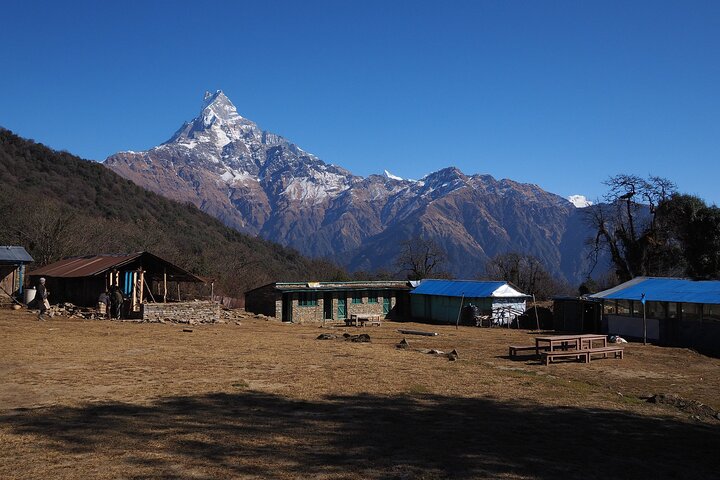
The Mardi Himal Trek offers a classic teahouse trekking experience, meaning you’ll stay in small mountain lodges and eat freshly prepared local meals along the trail. While facilities are simpler than in popular routes like Annapurna Base Camp, they are comfortable enough for a pleasant trekking experience.
Accommodation on Mardi Himal Trek
Teahouses & Lodges
Accommodation is mainly in basic teahouses run by local families.
What to expect:
- Twin-sharing rooms with simple beds
- Mattress, pillow, and blanket provided
- Wooden rooms with thin walls
- Shared bathrooms (mostly squat toilets at higher altitudes)
At lower elevations (Forest Camp, Low Camp), you may find slightly better facilities compared to higher camps.
Accommodation by Trekking Route
- Forest Camp: Basic but comfortable lodges in forest surroundings
- Low Camp: Standard teahouses with better availability
- High Camp: Very limited lodges, more basic conditions
- Near Base Camp: No accommodation (day hike from High Camp)
Rooms become more basic and limited as you go higher.
Facilities Available
- Electricity: Available (often solar-powered at higher altitudes)
- Charging: Extra cost (NPR 200–500 per device)
- Wi-Fi: Limited or slow, sometimes paid
- Hot Shower: Available at lower camps (extra charge)
Food on Mardi Himal Trek
Food is simple, fresh, and designed to provide energy for trekking.
Common Meals Available
Staple Food
- Dal Bhat (rice, lentils, vegetables) – unlimited refills
- Fried rice, noodles, pasta
Other Options
- Soups (vegetable, garlic, noodle)
- Momos (dumplings)
- Pancakes, porridge, eggs, toast
- Tea, coffee, hot chocolate
Dal Bhat is highly recommended as it is nutritious and filling.
Drinking Water
- Bottled water available but expensive at higher altitudes
- Boiled water available (paid)
- Carry water purification tablets or filter
Important Food & Stay Tips
- Eat where you stay for better pricing and availability
- Order meals early (especially at High Camp)
- Carry snacks (energy bars, nuts)
- Avoid meat at higher altitudes (freshness issues)
- Stay hydrated (3–4 liters daily)
Accommodation on the Mardi Himal Trek consists of basic teahouses with shared facilities, becoming simpler at higher altitudes. Food is fresh and energy-rich, with Dal Bhat as the main staple. While amenities are limited, the experience is comfortable and authentic for trekkers.
Important Tips for Mardi Himal Trek
The Mardi Himal Trek is a short Himalayan adventure, but proper preparation makes a huge difference. Here are essential, practical tips to ensure a safe, enjoyable, and successful trek.
Prepare Your Fitness in Advance
Even though it’s an easy-to-moderate trek, you’ll walk 5–7 hours daily.
Tips:
- Do cardio (hiking, jogging, cycling) 2–3 weeks before
- Practice uphill walking and stair climbing
- Build stamina, not speed
Acclimatize Properly
The trek reaches around 4,500 meters, where altitude sickness can occur.
Prevention Tips:
- Ascend gradually
- Stay hydrated (3–4 liters daily)
- Avoid alcohol and smoking
- Learn the symptoms of altitude sickness
If symptoms worsen, descend immediately.
Pack Smart & Light
Carry only essentials to avoid fatigue.
Must-have items:
- Warm layers (down jacket, thermals)
- Good trekking shoes
- Rain gear
- Sleeping bag (especially in colder months)
- Headlamp, power bank
Start Trek Early Each Day
Weather in the mountains is unpredictable.
Why?
- Clear skies in the morning
- Avoid afternoon clouds and wind
- Reach the destination before dark
Eat Well & Stay Hydrated
Energy is crucial during trekking.
Tips:
- Eat Dal Bhat for sustained energy
- Drink plenty of fluids
- Carry snacks (energy bars, nuts, chocolates)
A Guide is highly recommended
Although the route is short, it can be confusing in forest sections.
Benefits:
- Navigation and safety
- Cultural insights
- Emergency support
Especially useful for first-time trekkers.
Carry Enough Cash
There are no ATMs on the trail.
Tips:
- Bring enough Nepali cash from Pokhara
- Budget for food, accommodation, charging, Wi-Fi
Be Prepared for Limited Facilities
As you go higher, services become basic.
Expect:
- Limited electricity (solar power)
- Paid charging & Wi-Fi
- Basic toilets and rooms
Check Weather & Trek in the Best Season
Avoid unnecessary risks.
Best seasons:
- Spring (March–May)
- Autumn (September–November)
Avoid the monsoon due to slippery trails.
Drink Safe Water
Prevent stomach issues.
Options:
- Boiled water
- Water purification tablets
- Personal filter bottle
Maintain Hygiene
- Carry hand sanitizer and wet wipes
- Bring basic first aid kit
- Pack toilet paper
Respect Local Culture & Environment
- Greet locals with “Namaste”
- Avoid plastic waste
- Follow “Leave No Trace” principles
Stay Connected (Limited Network)
- Mobile network works at lower altitudes
- Inform family before trekking
- Don’t rely on internet
Walk at Your Own Pace
- Don’t rush
- Take regular breaks
- Listen to your body
Slow and steady is the key to a successful trek.
The Mardi Himal Trek is one of the best short treks in Nepal, but preparation, awareness, and smart planning are essential. With the right mindset and precautions, you’ll enjoy breathtaking Himalayan views safely and comfortably.
Prepare physically, pack light, stay hydrated, acclimatize properly, and carry cash. Trek in spring or autumn, start early, and consider a guide for a safe and smooth Mardi Himal experience.
FAQs – Mardi Himal Trek
How difficult is the Mardi Himal Trek?
- The trek is considered easy to moderate. It’s suitable for beginners with basic fitness, but you should be prepared for 5–7 hours of daily walking and some steep ascents.
How long does the Mardi Himal Trek take?
- The trek typically takes 5 to 7 days, depending on your itinerary and pace.
What is the maximum altitude of Mardi Himal Trek?
- The highest point is Mardi Himal Base Camp (4,500 meters).
Is altitude sickness a concern?
- Yes, there is a risk above 3,000 meters. Proper acclimatization, hydration, and a slow pace help prevent it.
Do I need a guide for the Mardi Himal Trek?
- A guide is not always mandatory, but highly recommended for safety, navigation, and a better experience.
What permits are required for the Mardi Himal Trek?
You need:
- ACAP Permit (Annapurna Conservation Area Permit)
- TIMS Card (in most cases)
What is the best time for the Mardi Himal Trek?
The best seasons are:
- Spring (March–May)
- Autumn (September–November)
How much does the Mardi Himal Trek cost?
- The total cost ranges from $300 to $600 per person, depending on services, guide, and personal expenses.
What kind of accommodation is available?
- You’ll stay in basic teahouses with simple rooms and shared facilities. Comfort decreases at higher altitudes.
What food is available during the trek?
Common meals include:
- Dal Bhat
- Noodles, pasta, fried rice
- Soups, tea, coffee
Is Mardi Himal Trek safe for solo trekkers?
- Yes, it is generally safe, but trekking with a guide or group is safer, especially in remote sections.
Are there ATMs on the trail?
- No, there are no ATMs on the route. Carry enough cash from Pokhara.
Is Wi-Fi and electricity available?
- Wi-Fi: Limited and often paid
- Electricity: Available but charging costs extra
Can beginners do the Mardi Himal Trek?
- Yes, it is one of the best beginner-friendly treks in Nepal.
What should I pack for the Mardi Himal Trek?
Essentials include:
- Warm clothing
- Trekking boots
- Sleeping bag
- Rain gear
- Water purification