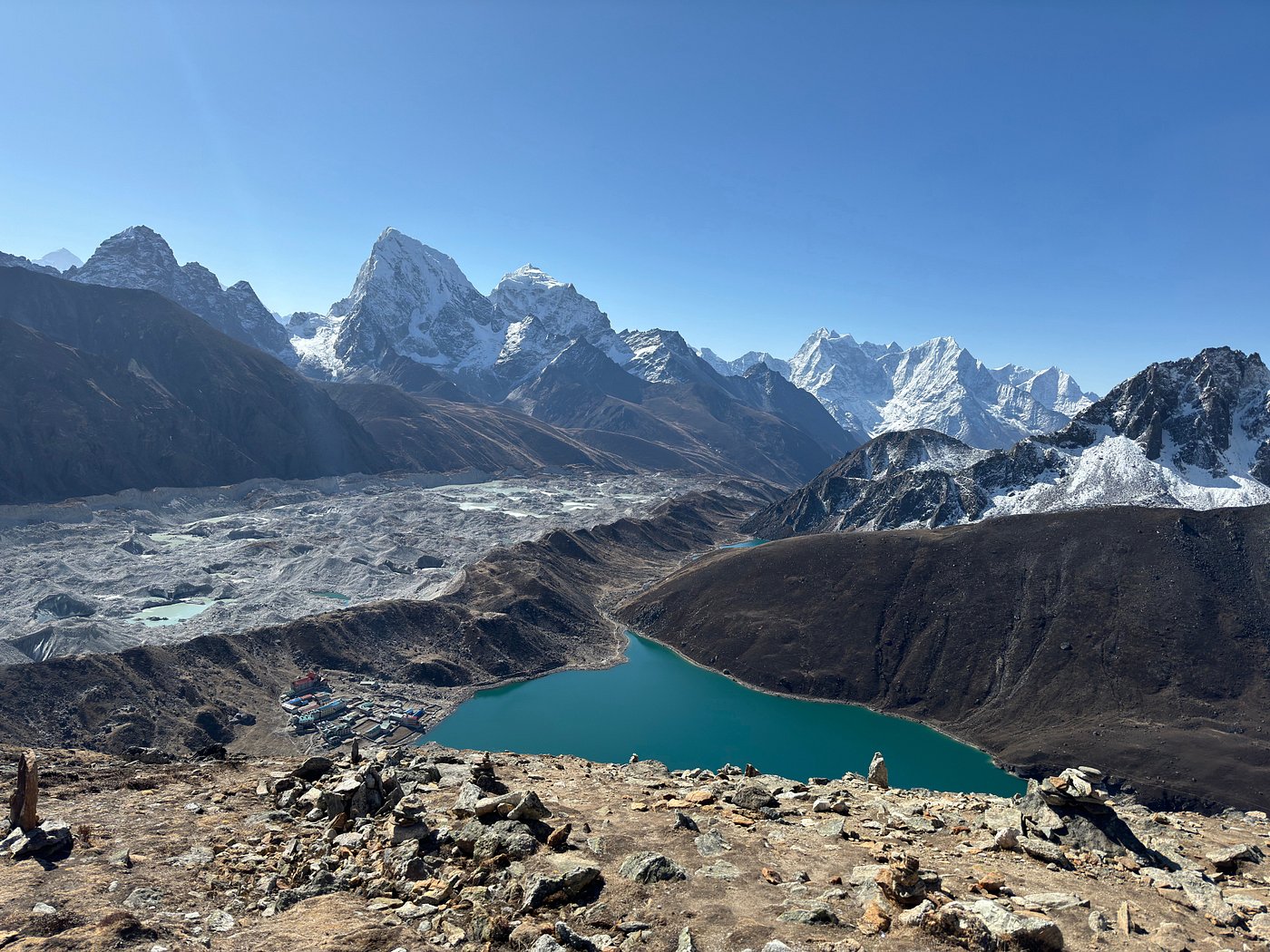
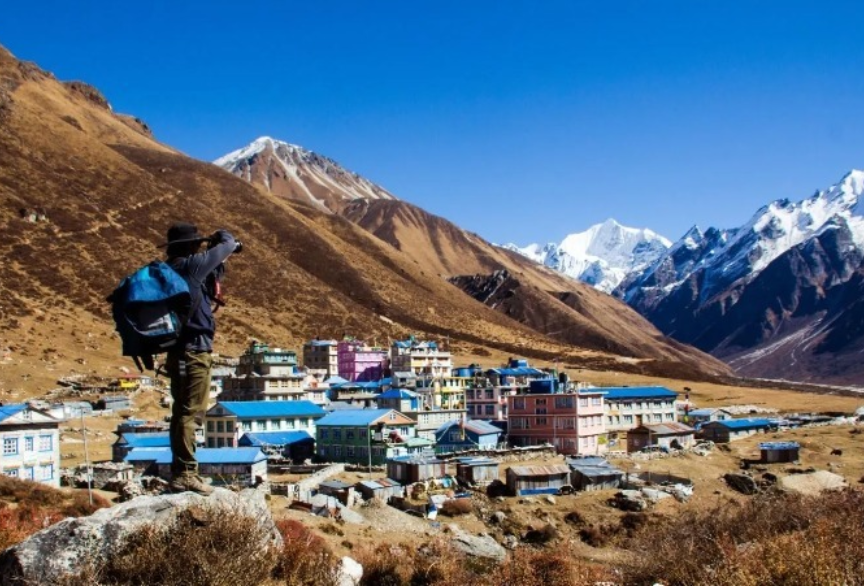


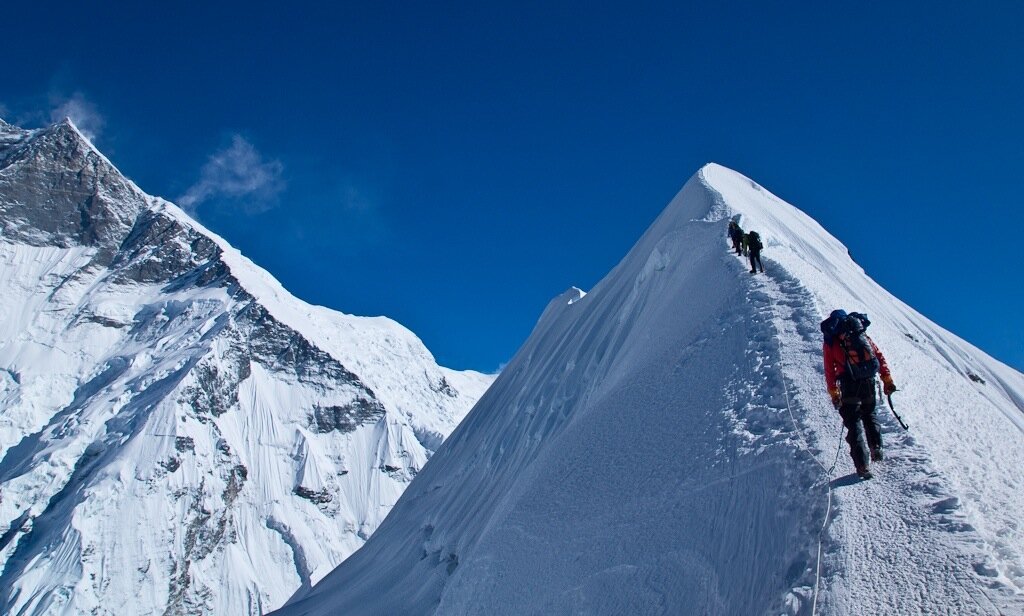
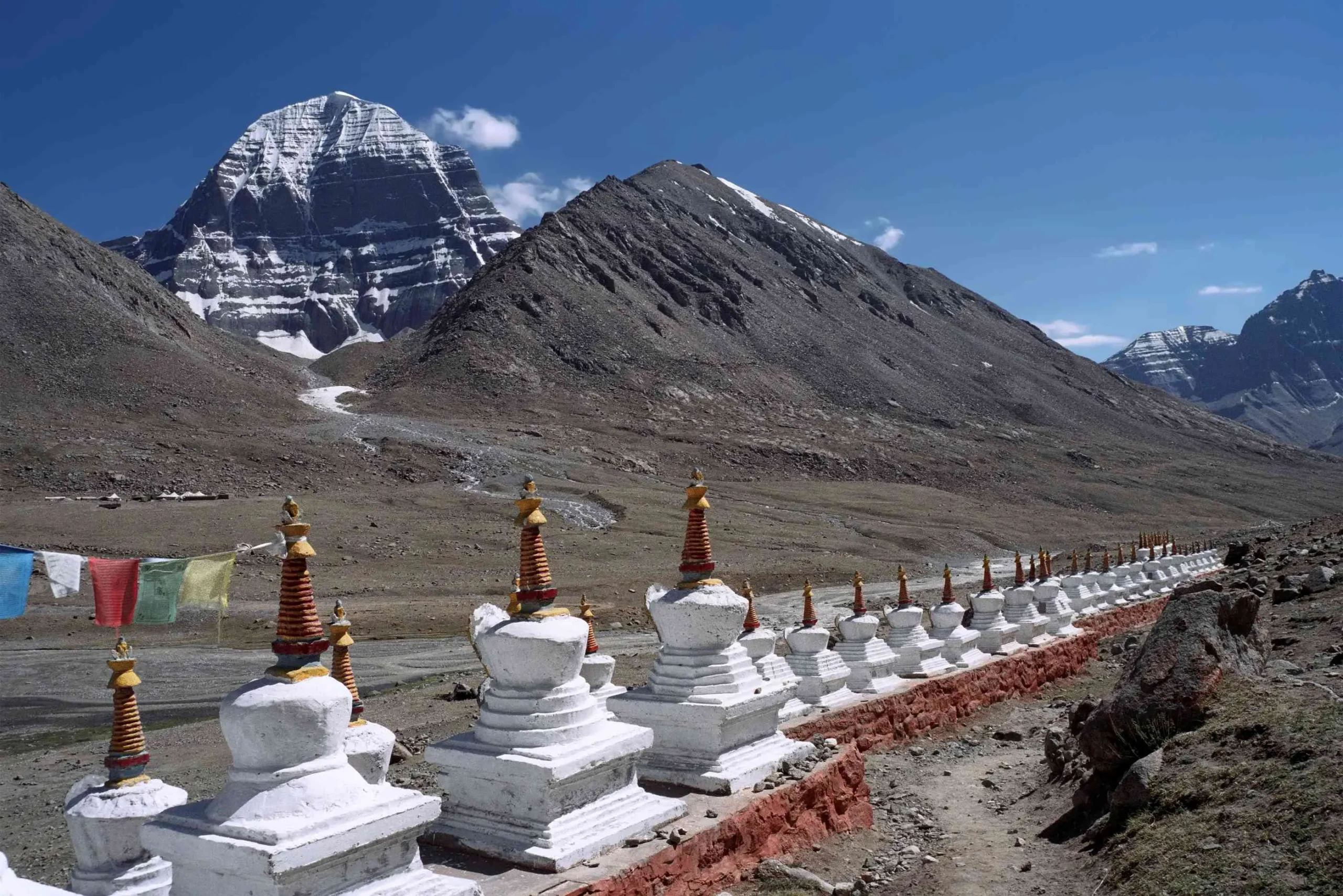


Climbing Lobuche Peak in 2026 is the perfect adventure for trekkers looking to elevate their Himalayan experience beyond Everest Base Camp. This peak offers the ultimate combination of trekking and mountaineering with breathtaking views of Everest, Lhotse, Ama Dablam, and Makalu. Whether you are preparing for future 8000m expeditions or seeking your first high-altitude summit, the Lobuche Peak itinerary for 2026 gives you a step-by-step plan to achieve your climbing dream safely and successfully.
Lobuche Peak Itinerary For 2026 – Day-by-Day Schedule
| Day | Destination & Elevation | Walking Distance | Altitude Gain | Trekking Duration | Difficulty Level | Activities & Highlights |
|---|---|---|---|---|---|---|
| Day 1 | Arrival in Kathmandu (1,400m) | – | – | – | Easy | Airport pickup, transfer to hotel, expedition briefing |
| Day 2 | Kathmandu Sightseeing & Preparation | – | – | – | Easy | Cultural tour of UNESCO sites, gear inspection, permit process |
| Day 3 | Fly to Lukla (2,840m), Trek to Phakding (2,652m) | 8 km | -188m descent | 3–4 hrs | Easy | Scenic flight, gentle downhill trek along Dudh Koshi River |
| Day 4 | Phakding to Namche Bazaar (3,440m) | 10-12 km | +788m | 6–7 hrs | Moderate to Challenging | Enter Sagarmatha National Park, first Everest view from Top Danda |
| Day 5 | Acclimatization in Namche Bazaar (3,440m) | 3–4 km | +400m (during hike) | 3 hrs | Moderate | Hike to Everest View Hotel (3,880m), explore Sherpa culture |
| Day 6 | Namche to Tengboche (3,870m) | 10 km | +430m | 5–6 hrs | Moderate | Trail through pine forests, visit Tengboche Monastery |
| Day 7 | Tengboche to Dingboche (4,360m) | 11 km | +490m | 6 hrs | Moderate | Trek with Ama Dablam view, enter Imja Valley |
| Day 8 | Acclimatization in Dingboche | 4–5 km | +600m (hike) | 3–4 hrs | Moderate | Hike to Nangkartsang Peak (5,083m) for altitude adaptation |
| Day 9 | Dingboche to Lobuche (4,940m) | 8 km | +580m | 5–6 hrs | Moderate to Challenging | Trek via Thukla Pass, memorials of fallen climbers |
| Day 10 | Lobuche → Everest Base Camp (5,364m) → Gorak Shep (5,170m) | 12–13 km | +424m / -194m | 7–8 hrs | Challenging | Reach iconic EBC, explore Khumbu Glacier |
| Day 11 | Gorak Shep → Kala Patthar (5,545m) → Lobuche (4,940m) | 10 km | +375m / -605m | 7 hrs | Challenging | Sunrise view of Everest, descend to Lobuche |
| Day 12 | Lobuche to High Camp (5,400m) | 4 km | +460m | 3–4 hrs | Moderate but High Altitude | Begin technical ascent, climbing training with gear |
| Day 13 | High Camp → Lobuche Peak Summit (6,119m) → High Camp | 8–9 km | +719m / -719m | 9–10 hrs | Technical & Demanding | Early morning summit push with ropes, crampons |
| Day 14 | High Camp to Pangboche (3,930m) | 12 km | -1,470m | 6–7 hrs | Moderate | Descend via alpine meadows to warmer altitude |
| Day 15 | Pangboche to Namche Bazaar (3,440m) | 13 km | -490m | 5–6 hrs | Moderate | Trek along the Imja Khola, re-enter pine forests |
| Day 16 | Namche Bazaar to Lukla (2,840m) | 18 km | -600m | 6–7 hrs | Moderate | Final trekking day with celebration in Lukla |
| Day 17 | Fly from Lukla to Kathmandu (1,400m) | – | -1,440m | 35 min flight | Easy | Scenic flight, shopping & celebration in Kathmandu |
| Day 18 | Final Departure | – | – | – | Easy | Airport transfer and farewell |
Why Choose Lobuche Peak for 2026?
Strategic Location: Lobuche Peak lies close to Everest base camp, allowing climbers to combine EBC Trek + Lobuche Peak Climb.
Perfect Training for Everest: This peak is considered one of the best training summits for future 8000m expeditions.
Familiar Terrain with Moderate Difficulty: Lobuche East is labeled a “Trekking Peak” by Nepal Mountaineering Association (NMA), meaning it’s accessible to fit trekkers with basic mountaineering training.
Best Time to Climb Lobuche Peak in 2026
| Season | Months | Weather | Summit Success Rate |
|---|---|---|---|
| Spring | March – May | Stable and clear | ⭐ Highest |
| Autumn | September – November | Crisp skies, less wind | ⭐⭐ Very High |
| Winter | Dec – Feb | Very cold, possible snowstorms | ⭐ Moderate |
| Summer/Monsoon | June – Aug | Heavy rain, poor visibility | ❌ Not Recommended |
Lobuche Peak Cost for 2026
| Cost Component | Estimated Price (USD) |
|---|---|
| Climbing Permit | $350–$400 |
| Guide & Sherpa Support | $800–$1,200 |
| Accommodation & Meals | $40–$50/day |
| Flights (Kathmandu–Lukla Round Trip) | $350–$400 |
| Total Package | $2,500 – $3,200 (All inclusive) |
Tip: Booking early for 2026 can secure discounts and guaranteed Everest region flight tickets.
Lobuche Peak Training & Preparation Tips for 2026
- Start physical training at least 4–6 months in advance
- Focus on cardio, strength, and endurance
- Practice hiking with a 10–15 kg backpack
- Learn ice axe, crampon, and rope techniques
- Get altitude trekking experience (Everest Base Camp, Island Peak, Mera Peak)
Lobuche Peak Difficulty Level
- Altitude is the biggest challenge
- Technical sections include ice walls and fixed rope ascents
- Requires good physical fitness
- Success rate is high with proper acclimatization
Permits Required for Lobuche Peak 2026
| Permit Type | Cost |
|---|---|
| Lobuche Peak Climbing Permit | $350 (Spring) / $200 (Autumn) |
| Sagarmatha National Park Entry | $30 |
| Khumbu Pasang Lhamu Rural Municipality Fee | $20 |
Lobuche Peak Climb & EBC Trek – Complete Packing List
A. Clothing & Layering System
Base Layers (Inner Thermal)
2–3 moisture-wicking thermal tops (synthetic or merino wool)
2 thermal bottoms
Mid Layers
2 fleece jackets or pullovers
1 lightweight down jacket for trekking days
1 expedition-grade down jacket (for high altitude & summit night)
Outer Layers
Waterproof & windproof shell jacket (Gore-Tex recommended)
Waterproof hiking pants
Insulated expedition pants (for summit attempt)
Trekking Pants & Shirts
2–3 pairs trekking pants (quick-dry)
4–5 quick-dry trekking shirts (long and short sleeves)
1 pair of comfortable trousers for teahouse evenings
1 warm trekking hoodie
Underwear
5–7 moisture-wicking underwear
3–4 sports bras (women)
B. Handwear
Lightweight trekking gloves (inner gloves)
Windproof/waterproof insulated gloves (outer gloves)
Expedition-grade summit mittens with liners
C. Footwear
Trekking Boots
High-ankle waterproof trekking boots (broken-in before trip)
Climbing Boots
Double insulated climbing boots (e.g., La Sportiva, Scarpa)
Additional Footwear
4–5 pairs woolen trekking socks
2 pairs warm thermal socks (for summit night)
Camp shoes or sandals (for evenings)
Gaiters (for snow protection)
D. Climbing Equipment
(Usually available on rent in Kathmandu if you don’t want to carry your own)
Climbing harness
Ice axe
Crampons (compatible with climbing boots)
Ascender device (Jumar)
Belay/descender device (Figure 8 or ATC)
Carabiners (2 locking, 2 non-locking)
Climbing helmet
Prusik loops & safety cords
Tape slings (2–3)
Adjustable trekking poles
Climbing gloves (special grip)
1 snow bar/stake (provided by guide usually)
E. Bags and Backpacks
80–90L duffel bag (carried by porter)
30–40L daypack (for personal daily use)
Waterproof backpack cover
Small pouch for valuables
F. Head & Face Protection
UV-protection sun hat
Woolen or fleece beanie
Balaclava/neck gaiter/buff
Glacier sunglasses (category 4 for snow glare)
Headlamp with extra batteries (mandatory)
G. Sleeping Gear
4-season sleeping bag (-20°C to -30°C rating)
Sleeping liner (fleece or silk)
H. Personal Hygiene & Toiletries
Toothbrush, toothpaste, wet wipes
Biodegradable soap, shampoo sheet
Quick-dry towel
Sunscreen (SPF 50+)
Lip balm with SPF
Hand sanitizer
Toilet paper rolls
Feminine hygiene products (if needed)
Nail cutter and small mirror
I. Snacks & Hydration
2 water bottles (1L each)
Insulated thermos (for high camp)
Hydration bladder (optional)
Water purification tablets or Steripen
Energy bars, chocolates, trail mix
J. Personal First Aid & Medication
Diamox (altitude sickness)
Ibuprofen or paracetamol
Imodium (for diarrhea)
Antibiotics (as prescribed)
Blister plasters & band-aids
Wound bandage and antiseptic cream
Personal medications (as required)
K. Travel & Document Essentials
Passport (valid for 6+ months)
4 passport-size photos
Travel insurance with high-altitude mountaineering coverage
Cash (Nepalese Rupees for trek expenses)
Credit/debit cards
Permit copies and itinerary printout
Waterproof document holder
L. Electronics & Accessories
Mobile phone + charger
Power bank (minimum 20,000mAh)
Camera with spare batteries
Solar charger (optional)
Adapter (Type C dual pin in Nepal)
M. Optional (But Very Useful)
Small sewing kit
Duct tape for emergency repairs
Binoculars
Journal & pen
Playing cards/Kindle for evenings
Hot water bottle (for sleeping bag warmth)
Important Tips:
Keep your packing as light as possible but high quality & warm.
Most climbing gear can be rented in Kathmandu, reducing cost.
Porter weight limit is 15 kg per person, so pack wisely.
Double-check footwear and summit gear quality, as they are mission critical.
Climbing Lobuche Peak in 2026 is not just a trek—it’s a journey of personal achievement. This adventure offers a perfect blend of culture, trekking, and mountaineering. With proper planning, a certified guide, and the right preparation, you can successfully stand on one of the most iconic 6000m peaks in Nepal.
Ready to plan your Lobuche Peak Itinerary for 2026? Book early for the best guides, safety, and guaranteed departure!
Frequently Asked Questions
1. How difficult is Lobuche Peak climbing?
It is a moderately technical peak suitable for trekkers with basic mountaineering training.
2. Do I need previous climbing experience?
Not mandatory, but high-altitude trekking experience is highly recommended.
3. Can I combine Everest Base Camp trek with Lobuche Peak?
Yes, most itineraries include the EBC trek for proper acclimatization.
4. What is the summit success rate?
With experienced guides, success rates are above 90%.
5. What is the average cost for 2026?
The cost ranges between $2,500 and $3,200, depending on services and group size.
6. Is Lobuche Peak harder than Island Peak?
Lobuche Peak has a slightly more technical summit ridge, making it a bit more challenging.
7. What permits are required?
You need a climbing permit, Khumbu permit, and national park entry.
8. What is the best month to climb in 2026?
April, May, October, and November are the most stable months.
9. Do I need oxygen?
Supplementary oxygen is not usually required but is carried for emergencies.
10. What type of accommodation is available?
Tea houses during trekking and tented camping during the climb.